
Last updated August 26, 2026
Free on-site gate assessment - hinges, posts, and your LiftMaster or Nice gate operator checked before anything is quoted
The assessment is free and the quote is the invoice.
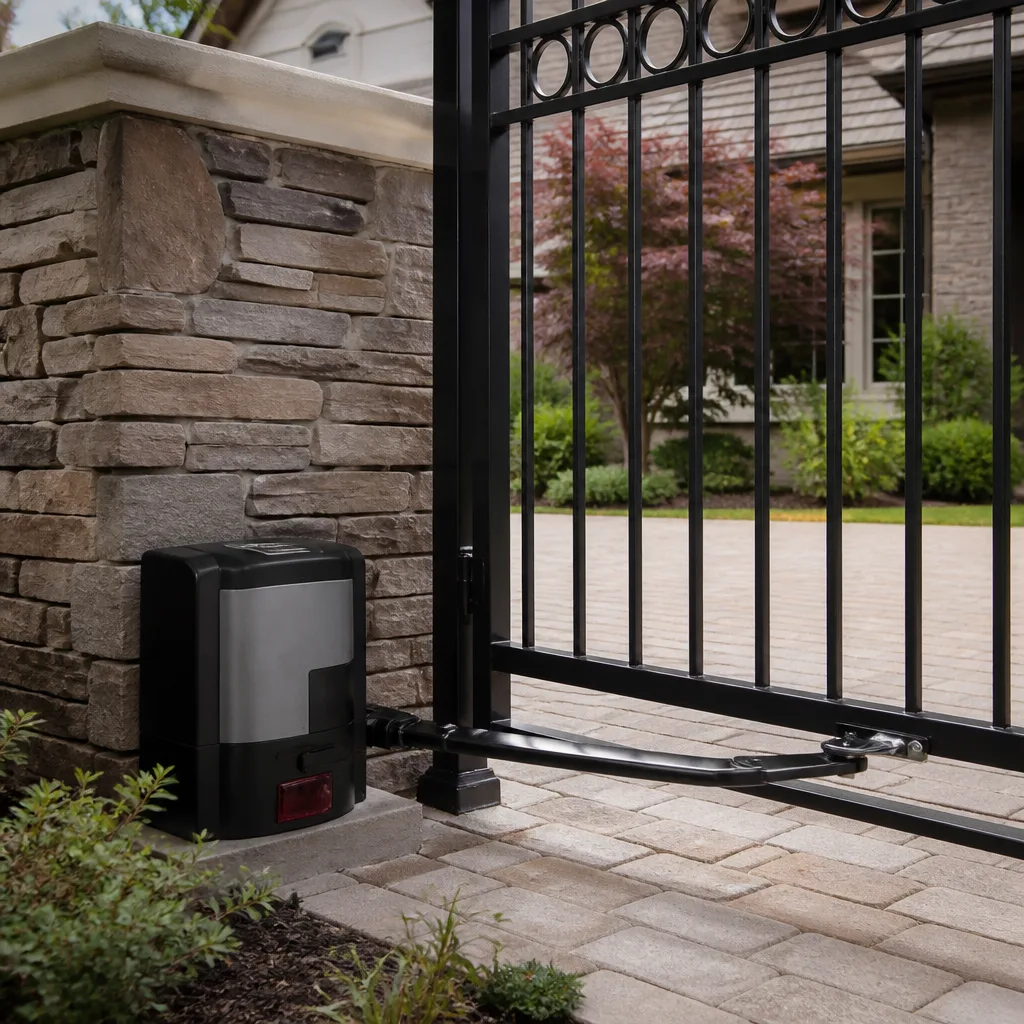
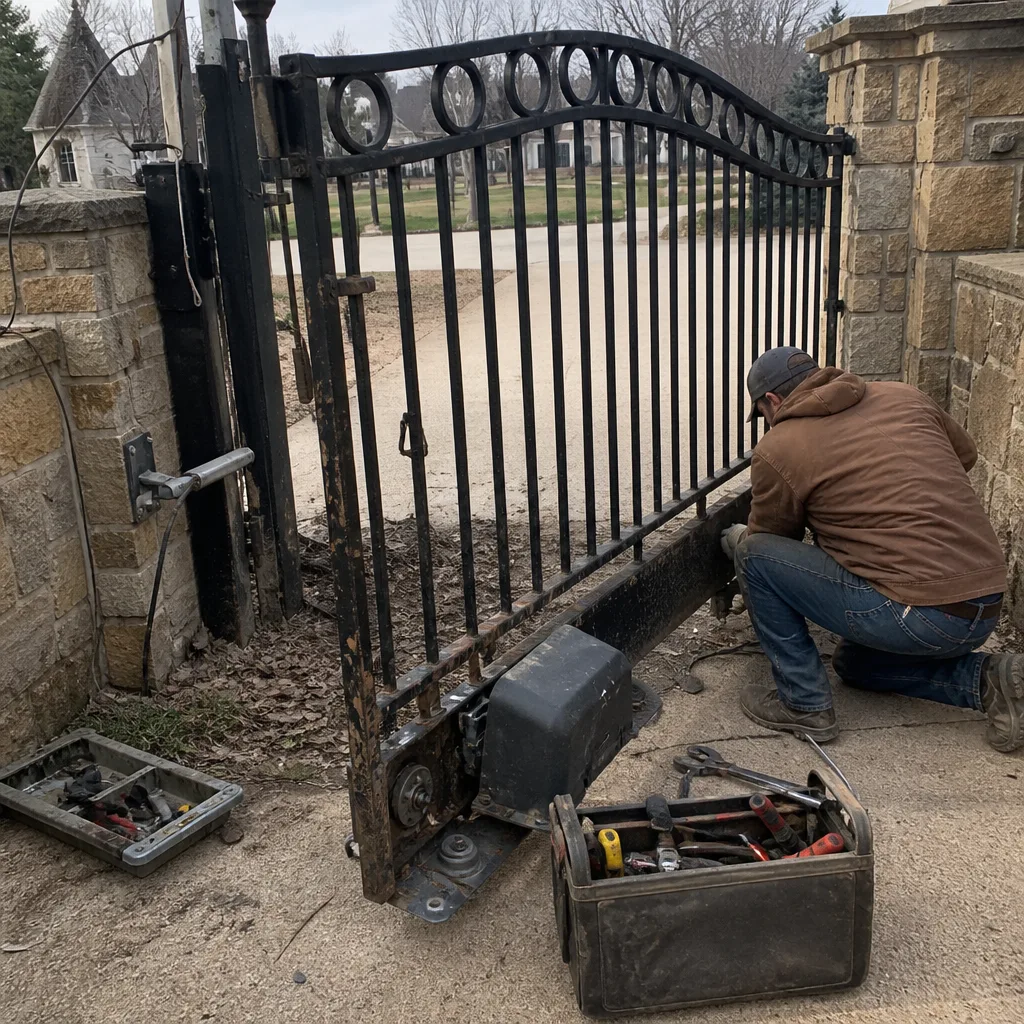 Before
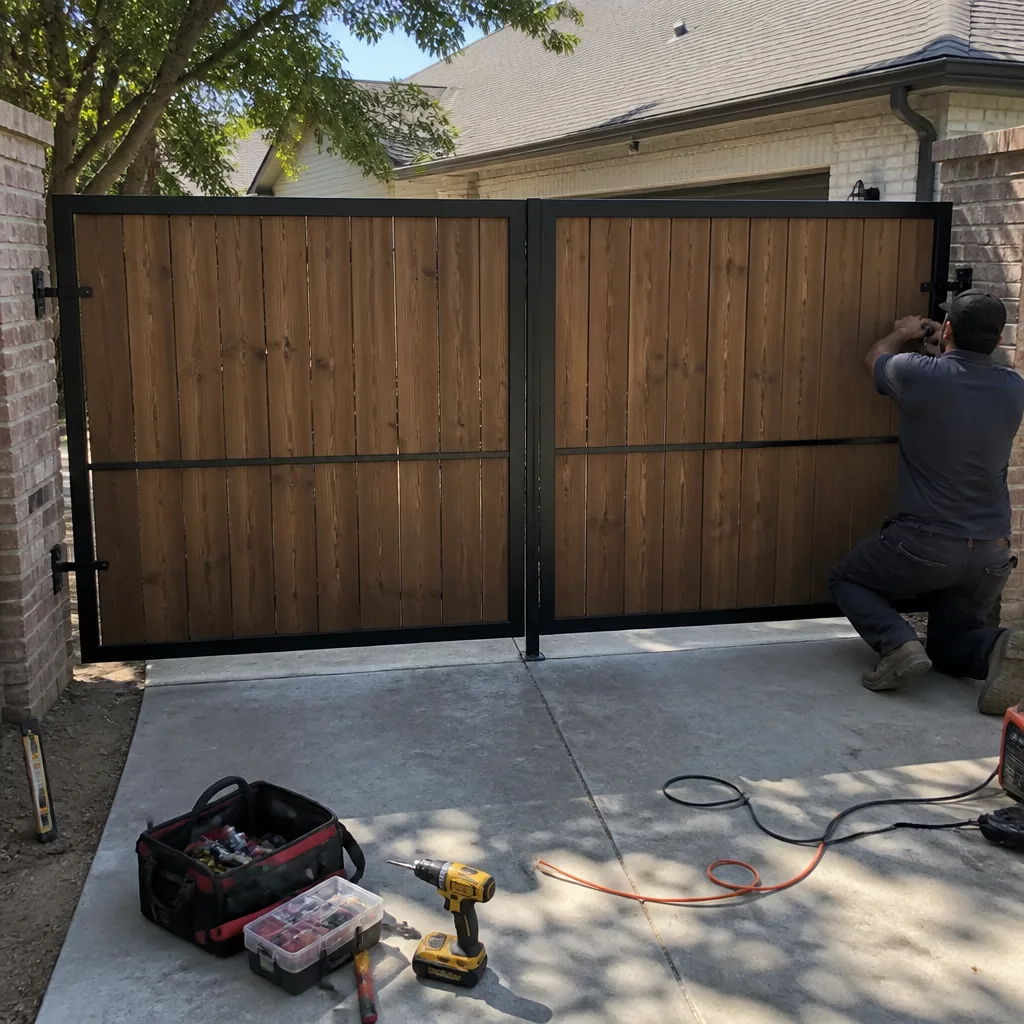 After
After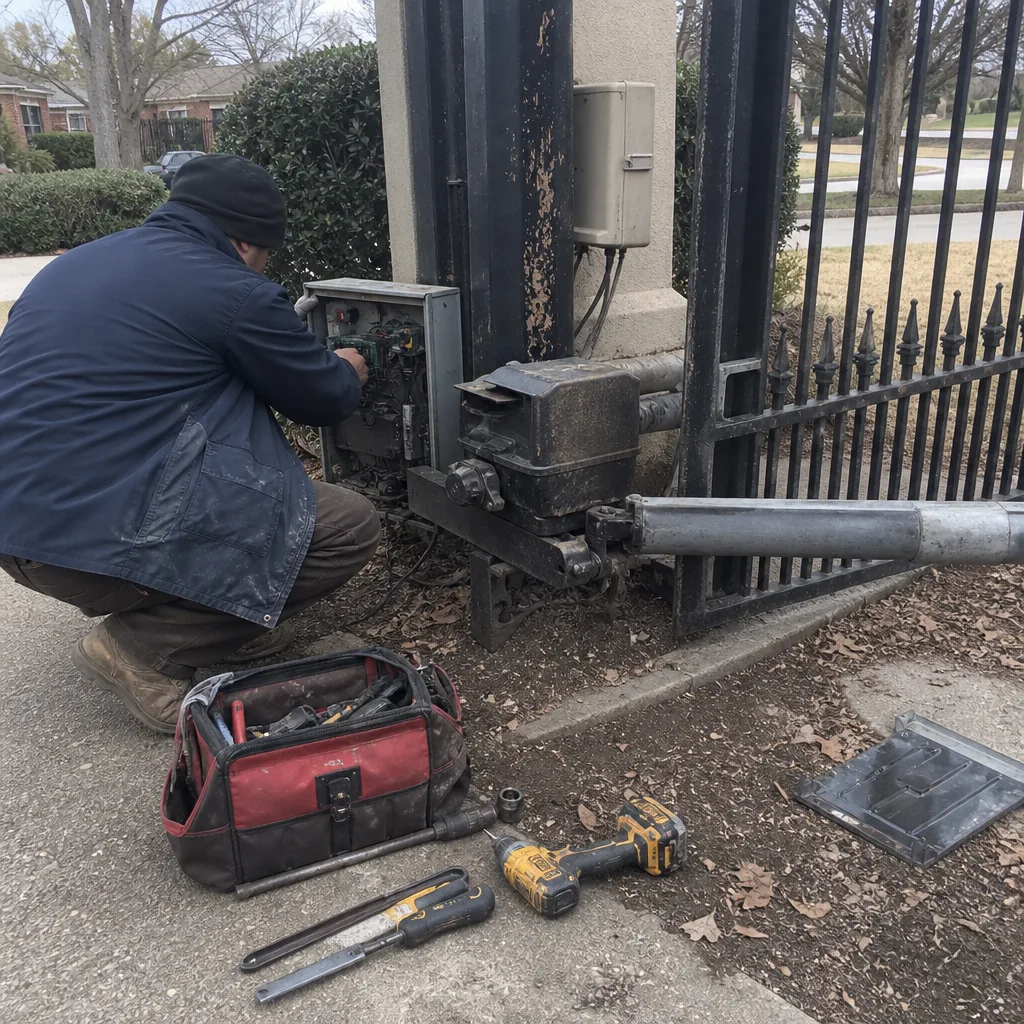 Before
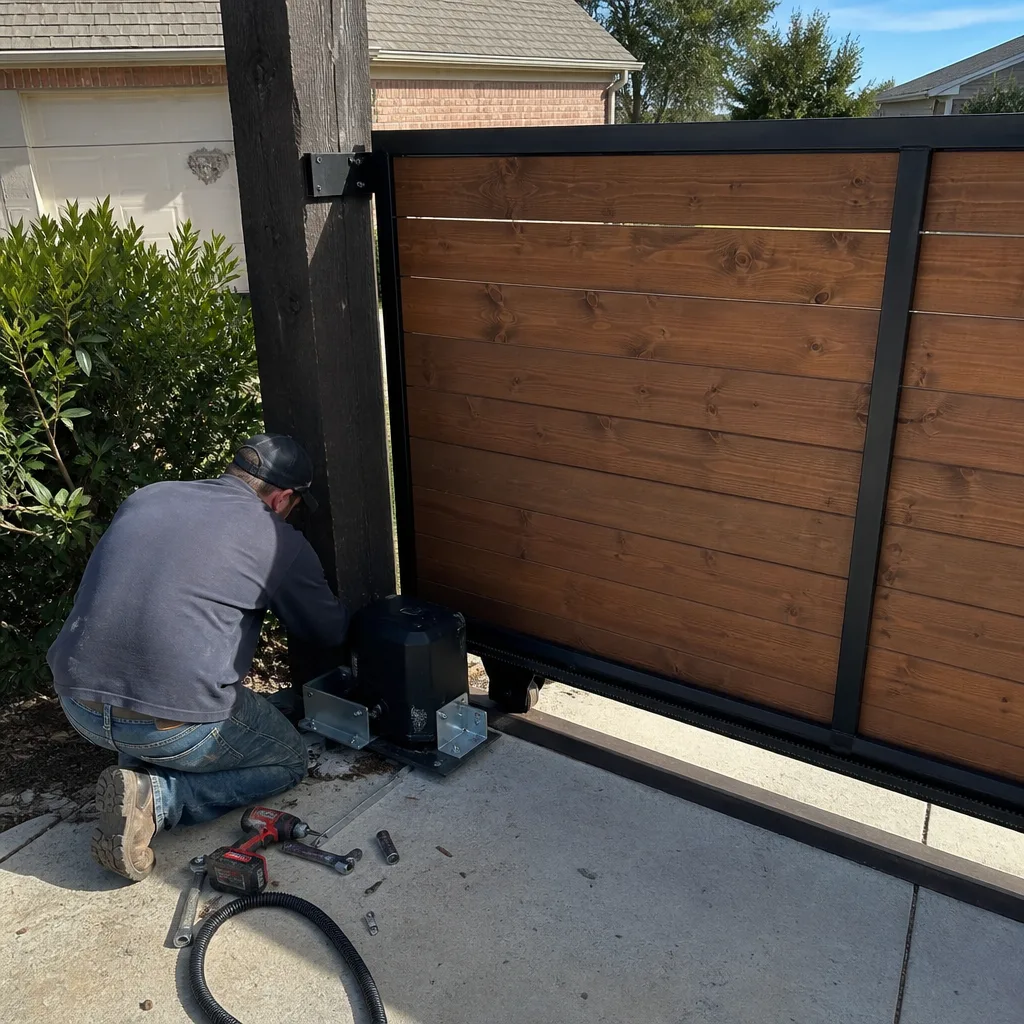 After
After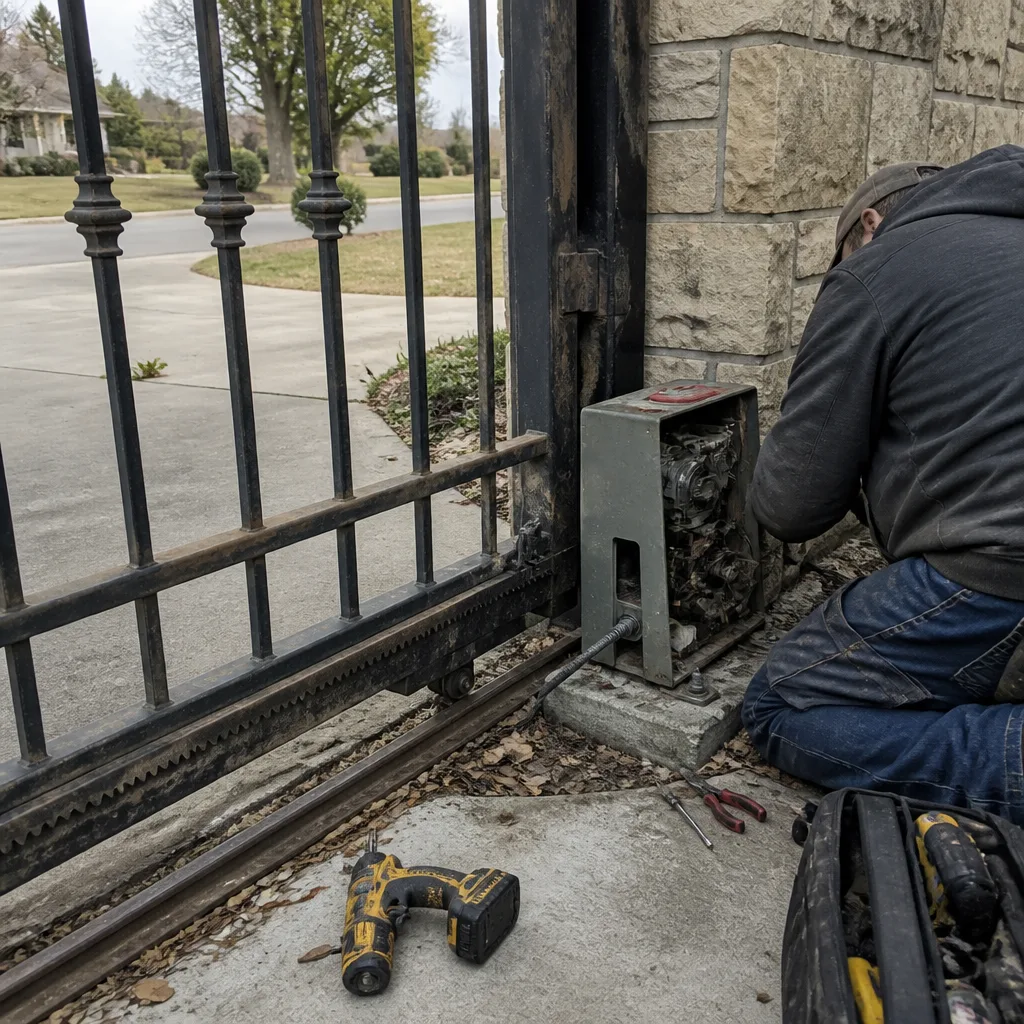 Before
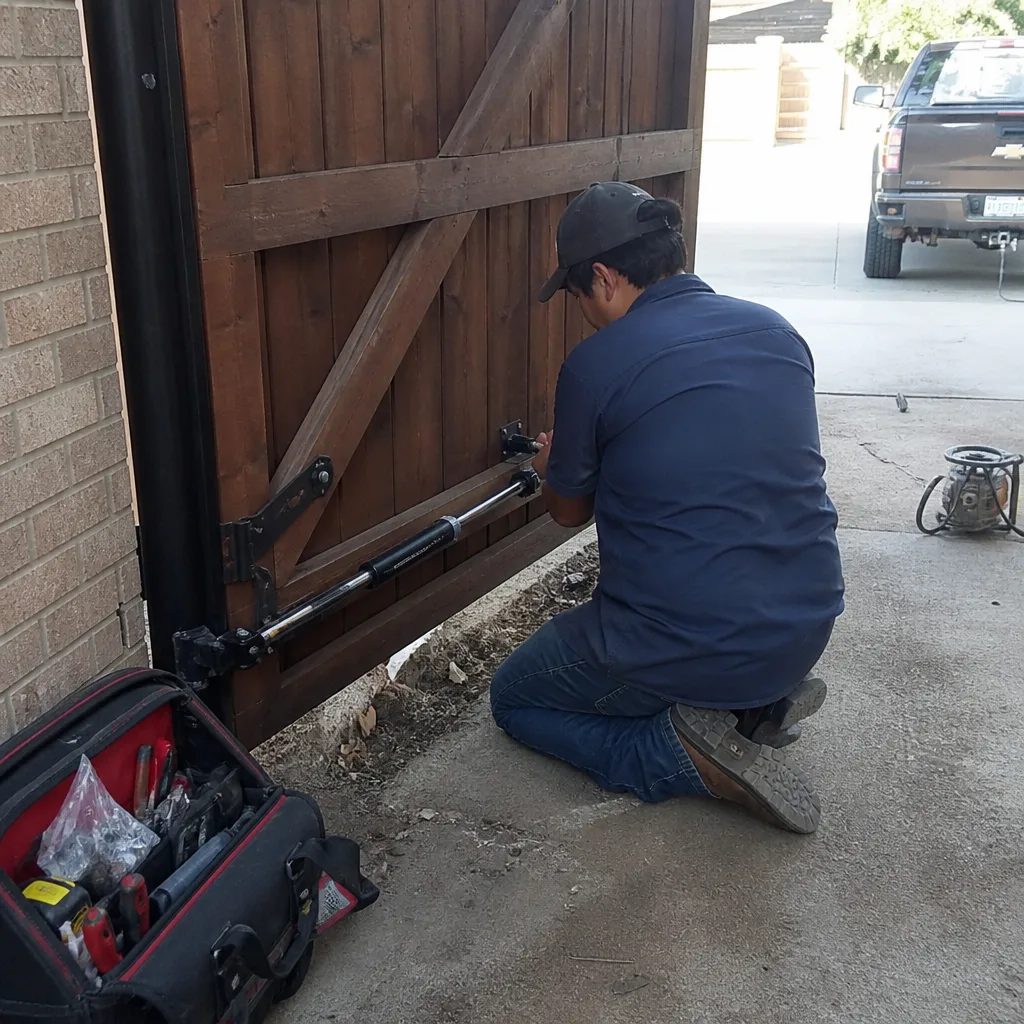 After
AfterThe Complete Guide to Gate Repair in Prosper
Here’s a number that should stop you cold: roughly seven out of ten gates we look at in Prosper don’t need what the previous company quoted. They need something smaller, cheaper, and more specific. The industry has a replacement bias because replacement is easier to sell from a truck. A sagging gate becomes a “new gate quote” when the actual problem is a hinge post that moved two inches in clay soil. This guide walks through every major gate system the way a guy who has been doing this since 2001 actually thinks about them: find the real problem first, fix that, and leave. You’ll learn how Prosperian soil attacks gate posts, why automatic openers fail more in August than February, and how to tell in five minutes whether a quote is for the right repair or a convenient sale.
Quick Answer
Our Gate Repair services in Prosper, TX typically run between $150 and $800 depending on whether the problem is a hinge, a post, a weld, or an operator. The most common gate failures in Prosper trace back to three root causes: clay soil heave shifting posts, undersized hinges installed before the house was even built, and automatic opener limit switches degrading from summer heat cycling. Most of these are repairable, not replaceable, and the right repair starts with identifying which of the three you actually have.
Table of Contents
- The Three Root Causes Behind Most Prosper Gate Failures
- Why North Texas Clay Soil Attacks Gate Posts
- Weld Repair vs. Frame Geometry: When Welding Kicks the Can
- Why Automatic Gate Openers Fail More in July-August
- How to Spot an Upsell Quote in Five Minutes
- What a 90-Day Workmanship Warranty Actually Covers
- Common Mistakes to Avoid
- When to Call a Professional
- Frequently Asked Questions
- The Bottom Line
If you’re dealing with a gate that won’t close, sags, or just quit, start with the section that matches your symptom. This guide covers everything from gate repair in Prosper basics to the deeper diagnosis most people miss.
The Three Root Causes Behind Most Prosper Gate Failures
Before we get into any specifics, you need the framework. In our experience fixing gates across Prosper since 2001, the overwhelming majority of failures come down to three things that get misdiagnosed daily:
- The post moved. Not the gate. Not the hinges. The post in the ground shifted, and everything attached to it shifted with it. A gate sags in the hinge post, not in the middle - and that is where we start.
- The hardware was undersized from day one. Builders in fast-growing areas like Prosper often install the cheapest hinge that meets a base spec. That hinge works for a year or two, then the gate’s weight wins. The gate didn’t fail; the hinge was never right.
- The automation was heat-cycled to death. This one’s specific to our climate. The motor isn’t burned out. The limit switch - a $40 part that tells the opener when to stop - has been cooked by repeated 100-degree afternoons until it forgets where the gate is.
That’s it. Those three account for most of what we’re called out to fix. Notice what’s not on the list: “the gate is old.” Old gates fail for a reason. Find the reason and the age stops mattering. For more on how we approach Gatewood Fence & Gate home service, our repair-first philosophy is the whole foundation.
Why North Texas Clay Soil Attacks Gate Posts
Before we answer the question directly, here’s the short version: expansive clay soil in Prosper shrinks during dry summers and swells during wet springs, and every shrink-swell cycle ratchets a gate post slightly out of plumb. Over three to five years, two inches of movement is common. That two inches is enough to make a gate drag, bind, or refuse to latch. And it is invisible to anyone who only looks at the gate panel itself. Here’s the deeper mechanism, because understanding it will save you from paying for a gate that wasn’t the problem.
Blackland Prairie clay - that’s the soil under most of Prosper - expands up to 10 percent in volume when saturated. A gate post set in concrete acts like a lever in that moving ground. The concrete footer doesn’t move much, but the soil around it pushes and pulls on the post above the footer. One cycle, nothing happens. Twenty cycles, the post leans a quarter inch. Forty cycles, the gate catches on the latch. The next company out runs a level on the gate, sees it out of square, and calls it a gate failure. It’s not. It’s a soil failure, and the repair is different.
Here’s what the right repair looks like. We pull the gate off the hinges, then we straighten or reset the post. Sometimes that’s a matter of welding bracing or adding concrete. Sometimes we drive a thicker post deeper and pour a wider footer. Then we re-hang the gate with oversized hinges that can handle the load. The gate itself often needs nothing. Fix the post without understanding the soil and you’ll fix it twice - because that same soil will move it again the same way.
In neighborhoods like Gentle Creek and Windsong Ranch where the lots have been worked and reworked, we see post movement from irrigation water settling the soil unevenly. The water follows the fence line, and the gate post is right there in the flow path. If your gate gets worse in fall after a season of heavy watering, that’s a clue.
Weld Repair vs. Frame Geometry: When Welding Kicks the Can
Welding is the most overpromised and underunderstood repair in this trade. It will absolutely fix a broken weld, a cracked hinge, or a torn latch plate. But it will not fix a gate whose frame has gone trapezoidal. And here’s the distinction we wish more homeowners were told before they spend money.
A gate that needs a weld repair has a specific, localized failure. A hinge weld cracked. A cross brace snapped. A picket broke free from the horizontal rail. The frame is still square, the posts are still plumb, and the gate sits where it’s supposed to sit except for that one break. Weld it, grind it clean, paint it, done. Hal has been doing on-site welding in Prosper driveways since 2001 specifically so that this kind of repair never means hauling a gate to a shop. The gate stays in your driveway, and you can watch the weld being made if you want.
A gate whose frame geometry is gone is different. Picture a rectangle that has become a parallelogram. The top corner at the latch side is three inches lower than the top corner at the hinge side because the hinge post leaned. If you weld a new hinge onto that leaning frame, you’ve just made a more expensive version of the same crooked gate. The weld will hold and the gate will still sag, because the post is still leaning. That’s the “kick the can” scenario - money spent, problem still there, and now the next company is blaming the last company’s weld instead of looking at the post.
Here’s how we distinguish the two. We run a level and a tape measure before we ever pick up a welder. If the frame is square and the post is plumb, the man welds. If the post is out, we fix the post. Show me a gate closing on its own and I’ll show you where it’s failing, and it’s usually not where the last weld is.
Why Automatic Gate Openers Fail More in July-August
The short answer: it’s usually the limit switch cooking, not the motor. The long answer is about thermal cycling and how limit switches track gate position through heat. Understanding this difference matters because a new motor costs $500 to $1,200 installed, while a limit switch replacement runs $150 to $300. The wrong diagnosis quadruples the bill.
How limit switches work: an automatic gate opener stops the gate at the open position and the closed position because a limit switch tells the motor where those positions are. On most operators - LiftMaster, FAAC, BFT, Linear - that limit switch is either a mechanical cam or an electronic sensor. The mechanical type has a physical contact that gets slammed every cycle. The electronic type has a circuit that sits inside the operator housing. In a Prosper summer, that operator housing bakes all day. We’ve measured surface temperatures over 150 degrees on dark metal operator boxes in July.
Here’s what happens. The limit switch components expand and contract with the heat. The mechanical contact wears faster when it’s hot. The electronic version drifts. One tolerable cycle after another, the switch moves slightly further from where it should be. Then one afternoon the gate that used to close all the way stops four inches short. Or it slams shut then reverses, because the switch thought it already hit the closed limit and triggered the reversal. The motor is fine. It’s doing what a circuit that has been slowly cooked is telling it to do.
This is the most common automatic-opener failure we see in Prosper, period. And it’s the one that gets missed constantly because the natural assumption is that a gate that stops mid-travel has a dead motor. It doesn’t. It has a dead switch. If you’re dealing with this now, the relevant page is gate motor and opener repair in Prosper. We’ll identify which brand and which switch before quoting a thing.
How to Spot an Upsell Quote in Five Minutes
You’ve probably sat through this before. A technician arrives, walks around the gate for ninety seconds, and hands you a quote for a full replacement at four figures. No tape measure. No level. No question about when you first noticed the problem. Here’s how to tell whether that quote is legitimate or whether you’re being sold the easiest thing for the technician. For DIY vs Professional Gate Repair: The Prosper Homeowner’s Decision Guide, read our breakdown. Run this check before you sign anything.
Look for the measuring. A legitimate diagnosis for a sagging gate or a wiring-related opener failure takes more time than just eyeballing it. The right technician puts a level on both posts. A long straightedge on the gate frame. A tape measure from top hinge to latch corner to compare with the opposite diagonal. If you see none of that happen during the visit, the quote is likely based on what the tech assumes, not on what he measured.
Second, ask one direct question: “What specifically is failing?” A legitimate answer names a part and a location. A hinge post is leaning toward the latch side by an inch and a half. The receiver board has a burned relay. The chain is stretched past its adjustment range. An upsell answer is vaguer. “These gates just don’t last” or “once they start going, it’s better to replace.” Vague is the tell. The person who can find the real problem can name the real problem.
Third, check the quote for the phrase “while we’re in there.” That phrase is where the bill grows. The gate needs new hinges, but while we’re in there, the operator is old, the pickets are faded, the wheels are plastic. No. Fix the real problem first, then watch what happens. If a second problem actually exists, it’ll be there in ninety days - and under a written workmanship warranty, the company that missed it gets to come fix it.
Finally, decline any quote that doesn’t specify labor and parts separately. A one-line total with no breakdown is designed to hide something. Upfront pricing means the price is quoted and the scope is agreed before any work starts, in writing, not in the driveway handshake.
If you’ve already got a written estimate from another company and want someone to tell you whether it’s necessary, we’ll give you a free second opinion on it. That’s a standing offer, not a promotion. Bring the quote to the shop or read it to us over the phone.
What a 90-Day Workmanship Warranty Actually Covers
There are two warranties floating around any gate repair job, and conflating them costs homeowners money. Here’s the plain distinction:
A manufacturer’s warranty covers the part. If a new LiftMaster control board fails six months in, LiftMaster replaces the board under their parts warranty. That warranty covers the manufacturing defect in the component itself. It does not cover the labor to diagnose the failure, remove the old board, install the new one, and re-tune the limits. It covers the cost of the part in a box. Nothing else. In practice, a manufacturer’s parts warranty means you pay on-site labor twice: the first labor charge was to install a part that failed, and the second labor charge is to install the replacement board the manufacturer sent you.
A workmanship warranty covers the labor and the quality of the install. If the hinge we welded starts to crack because the weld was done wrong, that’s a workmanship issue. The 90-Day Done Right Promise means what it says: if it’s not done right, we make it right. One call brings Hal back. No runaround, no “well, let’s see what the manufacturer says,” no scheduling an inspection two weeks out. The Promise is stated plainly in writing on every job we do in Prosper. Not “up to 90 days.” Not “in most cases.” Ninety days, done right or we’re back.
Here’s the part most homeowners don’t realize: a short workmanship warranty is actually a stronger signal than a long one. A company that offers a five-year “warranty” on gate hardware in North Texas clay soil knows that moisture heave and heat cycling will make those failures impossible to attribute to any one cause, so the warranty is effectively unclaimable. A 90-day promise is enforceable because the company will still exist in 90 days - the owner’s name is on the shop, the address is published, and the phone still rings. The name is on the shop, and the shop is down the road - that is the oldest accountability there is.
Ask any company quoting you: “Does this cover labor, or just parts?” If you get a pause, you have your answer.
Common Mistakes to Avoid
- Paying to straighten a gate instead of its post. A gate that sags because the hinge post shifted will eventually re-sag if you only straighten the panel. The panel wasn’t the thing that moved. This is the single most common wasted repair we see in Prosper, and the clay soil guarantees it’ll happen again within a year or two.
- Replacing a motor before checking the limit switch. When an opener acts erratically - stops short, reverses at the wrong time, won’t hold position - the default diagnosis from a rushed technician is a bad motor. The actual failure is usually a cooked limit switch, a $40 part. Never authorize a new motor until someone has tested the switch and told you the result.
- Accepting a quote without a written scope. If the quote says “gate repair - $850” and nothing else, you’re not buying a repair, you’re buying a blank check. The scope should say which post, which hinge, which part number, and what happens if the first fix doesn’t hold.
- Welding a hinge onto a frame that’s already out of square. The weld will hold. The gate will still hang wrong. The next technician will point at the weld as the problem, and you’ll be on your third repair bill for the same original post shift.
- Ignoring a gate that’s hard to open by hand. If the gate is getting stiff or heavy in manual operation, the hinges or the post are already failing. Waiting until the automatic opener burns itself out fighting that resistance turns a $200 hinge repair into an $800 operator replacement.
- Buying a new gate when the existing one needs a local fix. A cracked weld, a bent hinge, a shifted post - all repairable on site without replacing a panel that took 20 years to develop that particular patina anyway. Replacement is sometimes necessary. It’s not necessary as often as it’s quoted.
When to Call a Professional
Call when the post has visibly shifted, when an automatic opener starts misbehaving in any way, when a weld breaks, or when the gate no longer latches or binds inconsistently. These are not things to wait on. A gate that fails to latch is an open invitation, and a gate that binds is putting strain on hardware that will eventually snap. If the gate is heavy enough that you need both hands to move it, the operator is working against a load it wasn’t sized for. Call when you first notice it, not when it refuses to open. Gatewood Fence & Gate offers free estimates in Prosper - call (979) 291-0947 and a live person answers, day or night. Not a voicemail, not a queue. A person who will write down your name and show up when he said he would.
Frequently Asked Questions
Most gate repairs in Prosper run between $150 and $800. A simple hinge replacement or latch adjustment lands near the lower end, usually $150 to $300. A full post reset with concrete work runs $500 to $800. Operator repair - limit switches, boards, chains - falls in the $200 to $600 range depending on the brand and part. For a detailed Gate Repair Cost Breakdown: The Prosper Homeowner’s Reference for 2026, see our guide. Every price is quoted and agreed before any work starts, so the number you hear is the number you pay. Call (979) 291-0947 for an exact quote - estimates are free.
For most mechanical repairs - hinges, latches, welds, limit switches - yes, same-day service is available in Prosper when we’re on the schedule. If the repair requires resetting a post in concrete, that’s a job that needs the concrete to cure before the gate can be re-hung, so that one’s usually next-day. Call early and we’ll tell you exactly when someone can be there.
We service LiftMaster, FAAC, BFT, and Linear openers, along with five other major brands. The most common brands in Prosper are LiftMaster and Linear, so we stock the common limit switches and boards for those on the truck. If you have a brand you don’t see listed, call anyway - the odds are good we’ve already worked on it.
You need a new gate only when the frame itself is rusted through, cracked at multiple structural points, or so out of square that no amount of post straightening or hinge work will bring it back. Everything else - sag, drag, broken weld, bad latch, failed operator - is repairable. The gate that “needs replacing” is almost never the gate, and we’d rather show you that in person than sell you something you don’t need. If you’re already considering installation anyway, see gate installation in Prosper for what a properly built and hung gate should include.
It’s usually the limit switch, not the motor. The switch sits inside the operator housing, which bakes in 100-degree Prosper heat and drifts from its set positions. When that happens, the opener thinks the gate is somewhere it isn’t, and it behaves erratically - stopping short, reversing early, or not responding. The fix is a limit switch replacement, which runs far less than a new motor. Call us at (979) 291-0947 and we’ll test the switch before we ever recommend a motor.
For workmanship, yes - and in our trade it’s actually a strong signal. Most install errors show up within the first month to three months of operation, especially after the gate goes through a few North Texas weather swings. A 90-Day Done Right Promise in writing means if it’s not right, we come back and make it right. No claim process, no back-and-forth. The reason a workmanship warranty matters more than a parts warranty is that parts warranties cover the part in a box, not the labor to install it a second time.
The Bottom Line
Most gate problems in Prosper are smaller than they look and cheaper to fix than they’re quoted. A moving post, an undersized hinge, a heat-weary limit switch - these are the three roots of most failures, and none of them requires a new gate. The difference between paying once and paying twice is whether someone took the time to measure before they quoted. If you’re in Prosper and want the real diagnosis, not the convenient one, call (979) 291-0947 for a free estimate. For more guides & resources, visit our blog. A live person answers. The name on the invoice is the same name on the shop. I will be there myself - or you can drive to the shop and look me in the eye.
Written by Hal Gatewood, Owner at Gatewood Fence & Gate, serving Prosper since 2001.