
Last updated August 26, 2026
Free on-site gate assessment - hinges, posts, and your LiftMaster or Nice gate operator checked before anything is quoted
The assessment is free and the quote is the invoice.
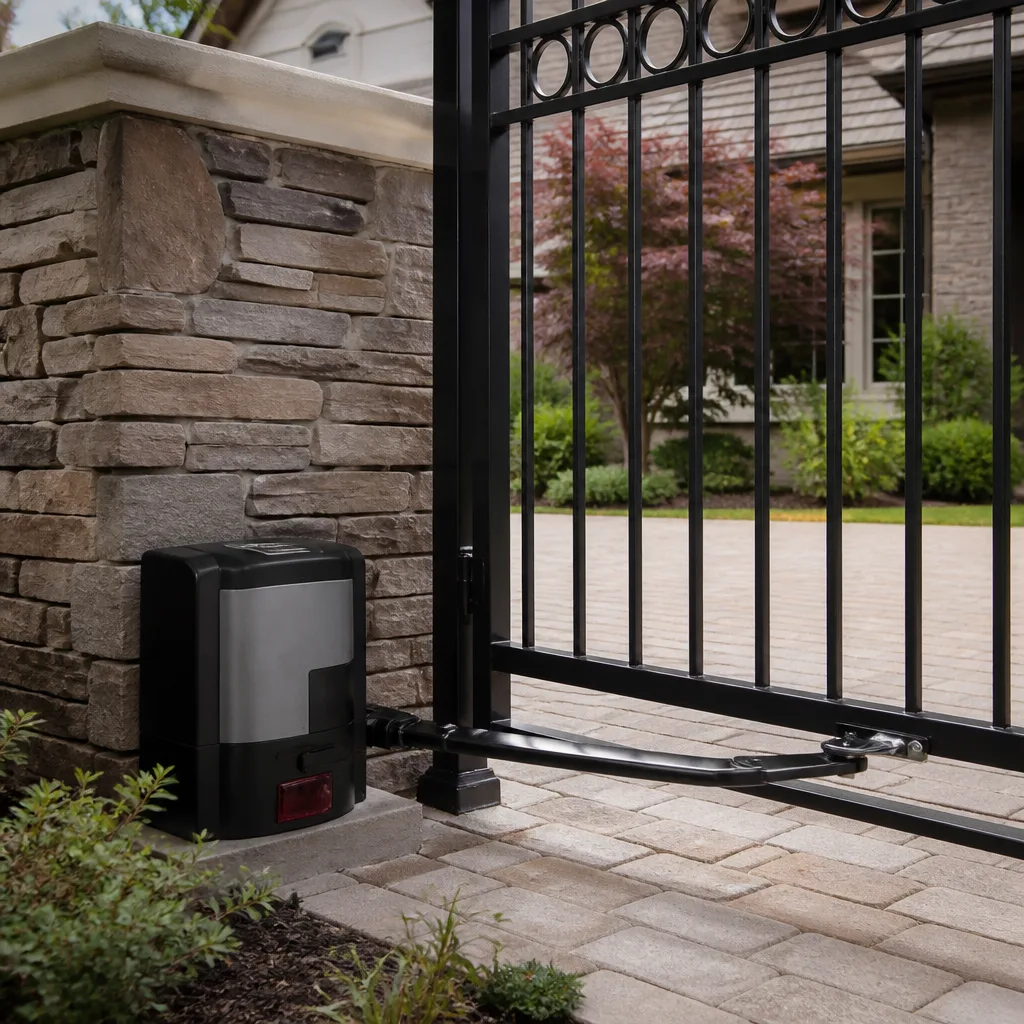
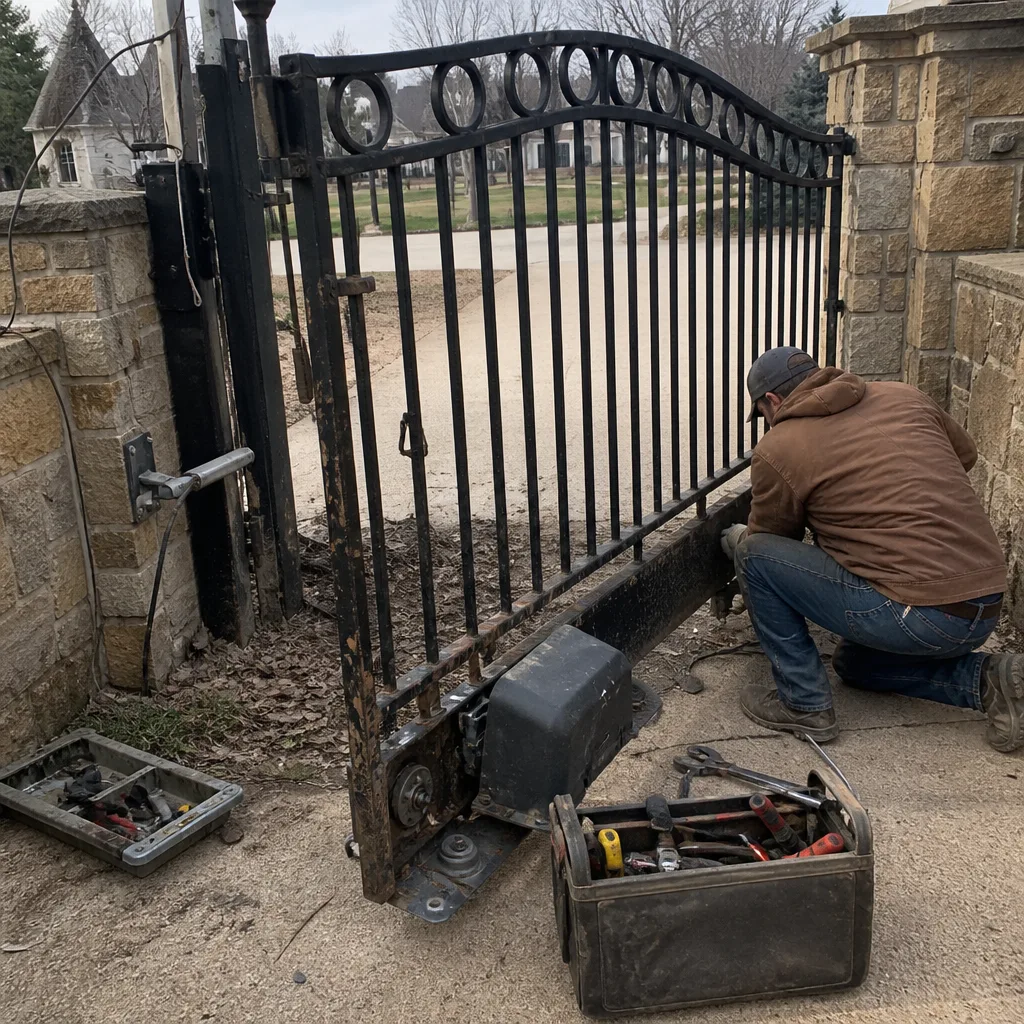 Before
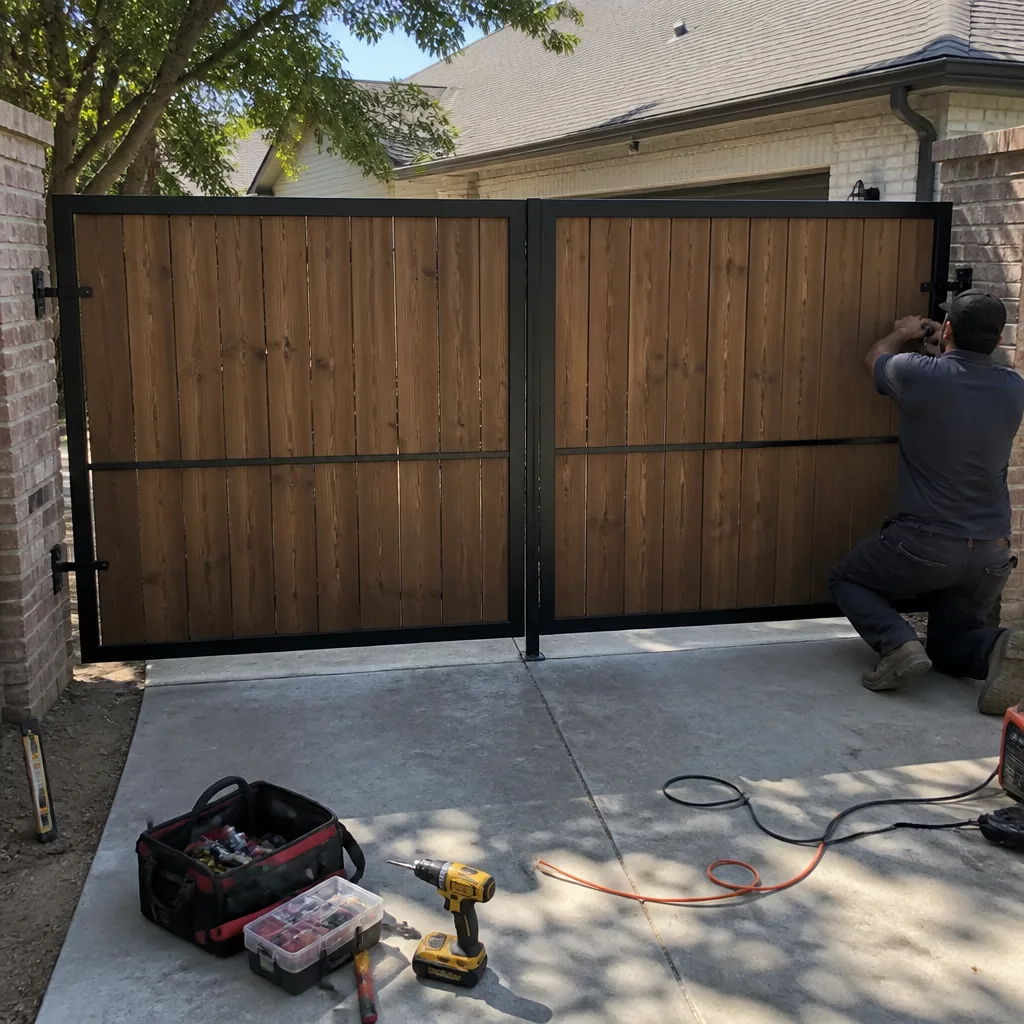 After
After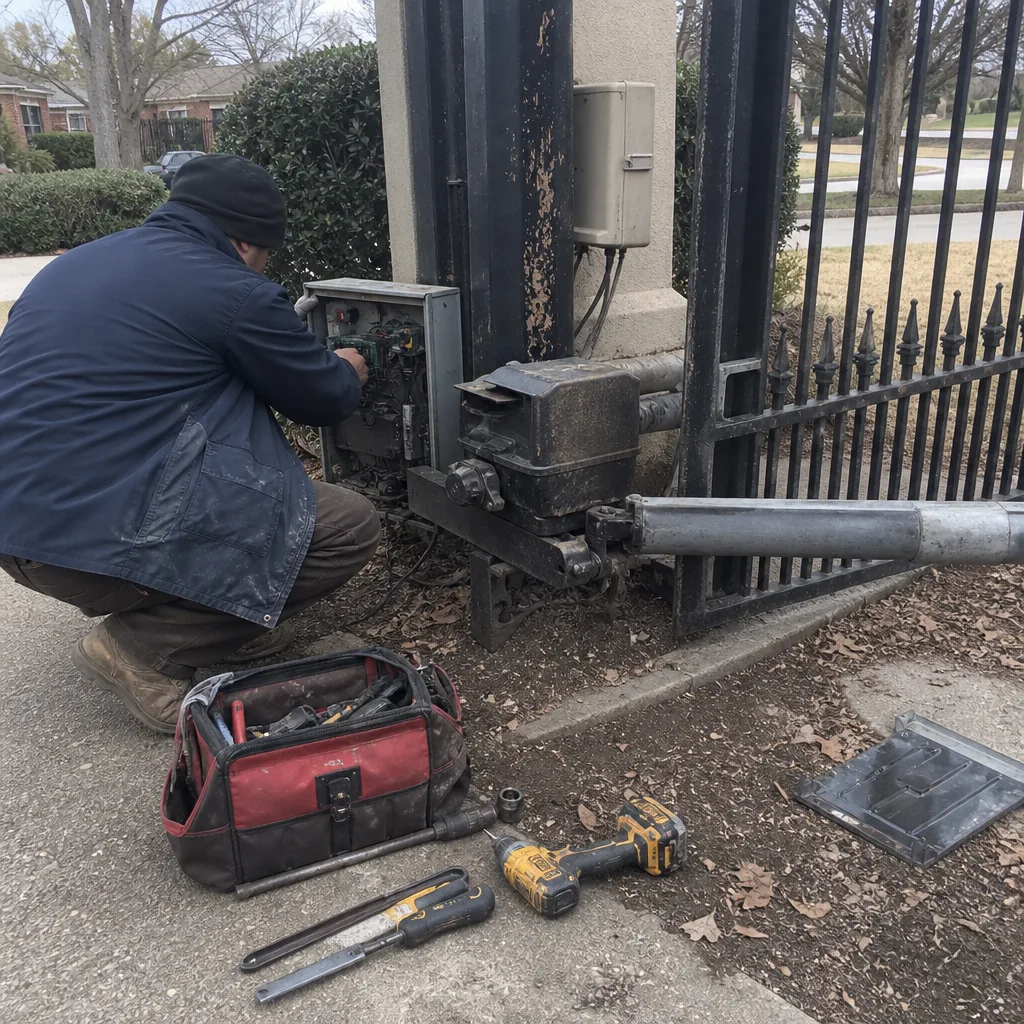 Before
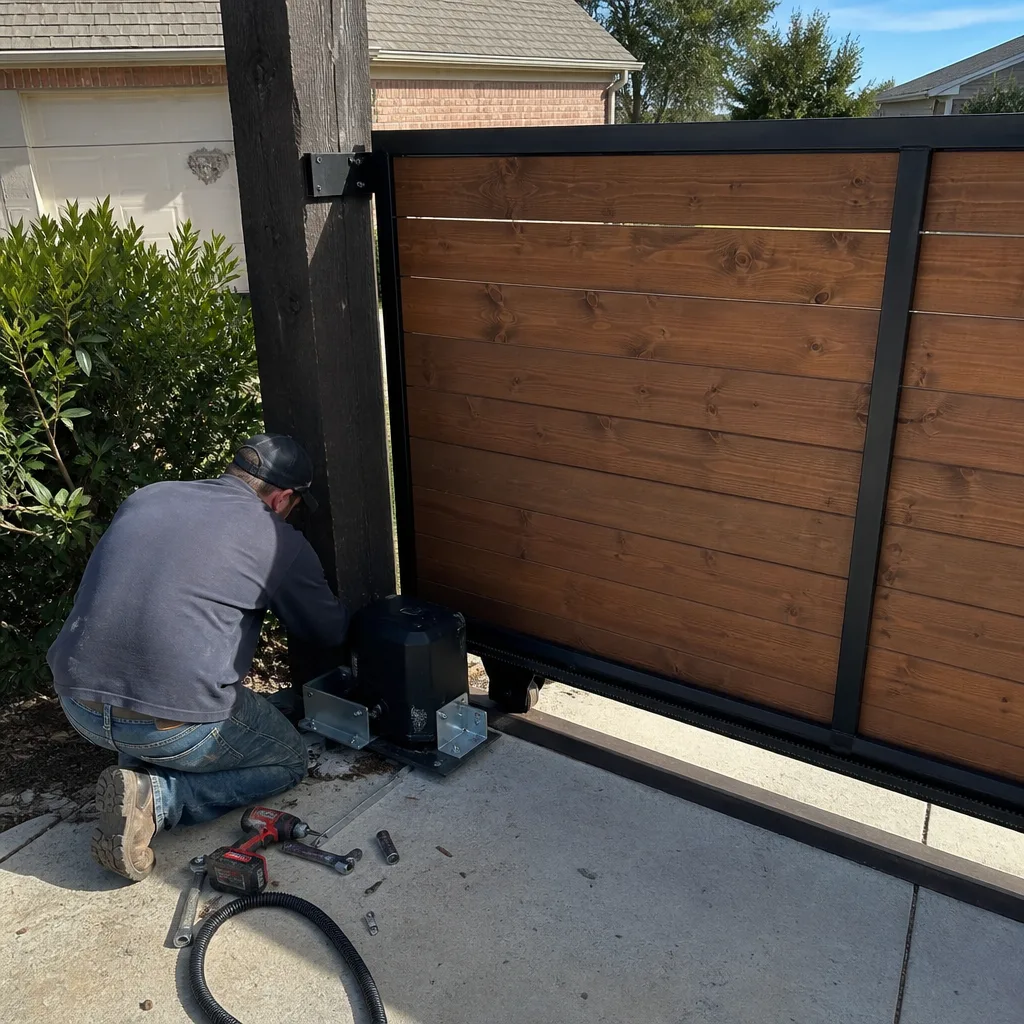 After
After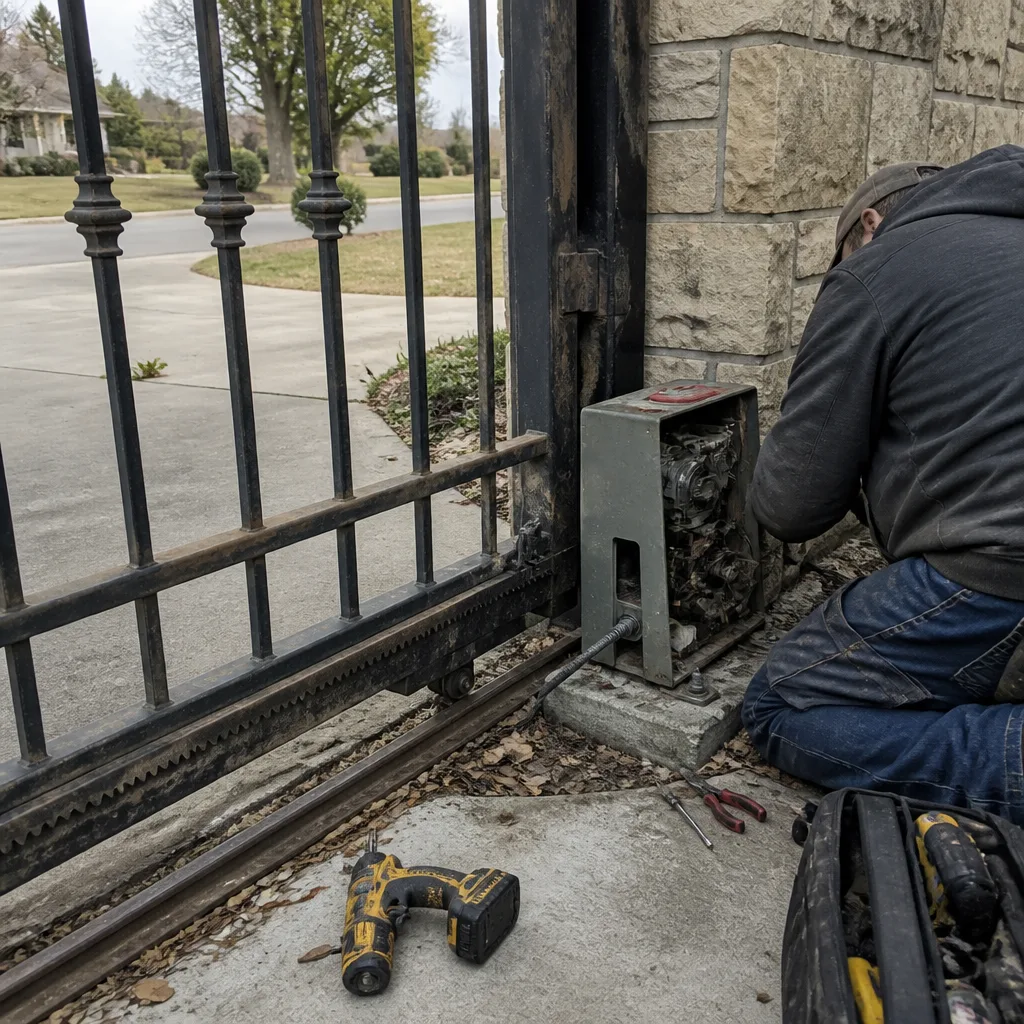 Before
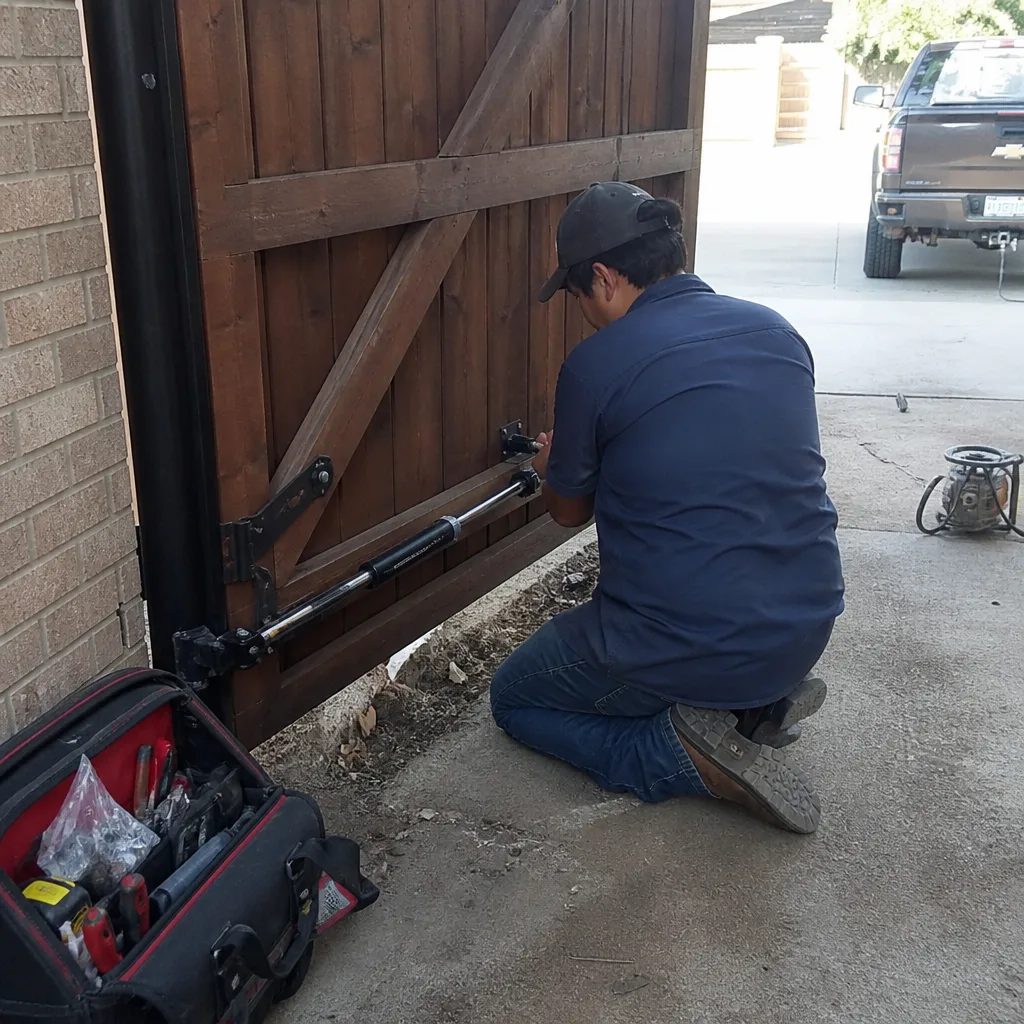 After
AfterSeasonal Gate Repair Care for Prosper: Year-Round Homeowner’s Guide
Prosper averages over 100-degree days every summer, and most gate openers are rated to 110°F at the control board. That margin disappears fast when the board is mounted inside a black metal box facing west. Summer isn’t when you do maintenance - it’s when you find out whether you did it in the fall. This guide walks through what actually happens to gates in Prosper, Texas across all four seasons, when to do what, and how to avoid our Gate Repair services with a single afternoon of work in October.
Quick Answer
For Prosper homeowners, the best time for gate maintenance is October through November, before winter moisture and summer heat take their turns stressing the hardware. The most important seasonal tasks are checking hinge post plumb, lubricating hinges and opener chains, replacing opener batteries that are older than two years, and inspecting the gate for hail damage after spring storms. Doing fall maintenance prevents most of the summer failures we see every year, and it costs a fraction of what an emergency repair costs in July. For DIY vs Professional Gate Repair: The Prosper Homeowner’s Decision Guide, consider whether to tackle this yourself.
Table of Contents
- Fall: The Maintenance Window Most Homeowners Miss
- Summer Heat and Your Gate’s Hidden Weak Points
- Spring Hail in Collin County: What Gets Damaged and What Gets Missed
- North Texas Winter: Clay Soil, Freeze-Thaw, and Post Movement
- Month-by-Month Gate Maintenance Calendar for Prosper Homeowners
- Why Hydraulic Gate Closers Fail in Summer (And What to Do About It)
- Opener Batteries and Seasonal Temperature Stress
- Hinge Wear and Post Plumb: The Repair That Saves You Money
- Common Mistakes to Avoid
- When to Call a Professional
- Frequently Asked Questions
- The Bottom Line
Fall: The Maintenance Window Most Homeowners Miss
In Prosper, October and November are the months when the weather finally stops punishing you. Daytime highs drop into the 70s and 80s. You can work outside without heat exhaustion, and your gate hardware is not being actively stressed by either extreme heat or freezing moisture. This is the window where maintenance actually gets done right, and it is the window Hal recommends for one simple reason: a gate that gets attention in the fall will almost never fail you in the summer.
Here is what fall maintenance looks like on a typical Prosper property:
- Check post plumb first. Use a 4-foot level against both hinge posts and the latch post. If a post is leaning more than a quarter inch out of plumb, that is not a cosmetic issue. It means the gate has been slowly working the post loose, and every cycle is making it worse. The gate sags in the hinge post, not in the middle - and that is where we start.
- Lubricate every moving part. Hinges on both gates, the latch mechanism, the opener chain or belt, and any slide-track rollers. Use a silicone-based lubricant, not WD-40, which attracts dust and turns into paste by spring.
- Replace opener batteries. Backup batteries in gate openers last roughly two to three years in the Prosper climate. If yours is older than that, replace it now. A dead backup battery is the reason your gate won’t open the first time the power goes out this winter.
- Inspect the chain or belt tension. A sagging chain slaps the rail and accelerates wear on both the chain and the sprocket. If you can lift the chain more than an inch in the middle of the run, it needs adjustment.
- Check every bolt and screw. Gate hardware vibrates loose over hundreds of cycles. A 15-minute pass with a socket set and the right size Allen wrenches will catch most of what will eventually become a real problem.
Fall is also when you should address anything that has been annoying you all summer - a gate opener that struggles in the heat, a latch that only catches sometimes, a sag that you notice when the gate is fully open. Fixing these in November means you are not fixing them in a July heatwave with a gate stuck halfway across your driveway. For a deeper look at what full maintenance looks like, our Gate Repair in Prosper page covers the full inspection we do on every service call.
Summer Heat and Your Gate’s Hidden Weak Points
A Prosper summer is not just hot. It is long. We regularly see stretches of 15 to 25 days where the high never dips below 100°F. Your gate hardware sits in direct sun for hours every day, and the metal components absorb that heat far beyond the air temperature. A black steel gate panel in August can reach 150°F on the surface, and the inside of a metal opener housing can exceed the control board’s rated operating temperature. This is where summer failures start.
Here is what heat actually does to a gate system in Prosper, and what to watch for:
- Control board thermal shutdown. Most residential gate opener boards are rated to 110°F or 125°F. Inside a sealed metal box, facing west, in direct afternoon sun, that number gets exceeded on the worst days. When the board overheats, the opener shuts down until it cools. If your gate stops working at 4pm every August afternoon and magically works again at 9pm, that is thermal shutdown, not a bad board.
- Capacitor failure. The start capacitor in a gate motor wears out faster when the motor runs hot. A failing capacitor shows up as a gate that starts slow, hums, or won’t start at all until you give it a nudge. Summer is when these failures become obvious.
- Metal expansion and hinge bind. Steel gates expand in high heat. If the gap between the gate and the post is too tight, the gate can bind against the post and refuse to close all the way. This is a measurement problem that shows up in summer, but needs to be fixed when the temperatures moderate.
- Solar panel output drop. For solar-powered gate openers, extreme heat actually reduces panel efficiency. A system sized for “average” conditions will struggle to keep the battery charged in August, leading to a gate opener that gets slower every day until it quits.
The thing about summer gate failures is that they almost always trace back to a fall maintenance item that got skipped. The chord that breaks in August was fraying in November. The post that gave way in a July storm was already leaning in March. Summer just exposes what the other seasons set up. For a more complete picture of repair timing, see our Gatewood Fence & Gate home page to understand how we approach diagnostics on gates that fail in the heat.
Spring Hail in Collin County: What Gets Damaged and What Gets Missed
Hail season in Prosper runs from March through May, and Collin County sees some of the most active hail corridors in North Texas. When a storm rolls through with quarter-sized or larger hail, homeowners check their roofs, their cars, and their windows. Almost nobody checks their gate. That is a mistake, because a gate takes hail impacts differently than any other surface on your property.
Here are the three gate components most likely to take hail damage in Prosper, and why homeowners miss them because the gate still opens:
- Opener control board housing. A metal opener housing can get dented by hail. If the dent is deep enough to contact the circuit board or bend the housing enough to compromise the weather seal, water intrusion follows. The gate still opens fine after the storm, so nobody thinks about it. Six months later, the board is corroded and the gate won’t respond. This is one of the most common hidden hail claims we see on gates.
- External keypad and intercom faces. These are mounted at thumb height, fully exposed. Hail cracks the keypad face, the plastic buttons, or the housing around the electronics. Water gets in, and the keypad starts doing strange things: not accepting codes, accepting the wrong codes, random ghost activation. If your keypad looks even slightly cracked after a hail storm, replace it before it leaves you locked out.
- Photoelectric safety sensors. These are mounted at ground level near the gate path. Hail can knock them out of alignment or crack the lens. A misaligned sensor will keep the gate from closing, which reads as a “broken gate” even though the motor and board are fine.
After any hailstorm with stones bigger than a dime, walk your gate and look for dents, cracked plastic, or anything that is not where it used to be. Most of these issues are covered under homeowner’s insurance, which is a conversation worth having with your agent. And if you want a second opinion on whether your gate took damage that matters, we are happy to look at it for free. More on that in the section on Gate Motor & Opener in Prosper.
North Texas Winter: Clay Soil, Freeze-Thaw, and Post Movement
Prosper winters are mild by national standards, but they are not harmless. The issue is not deep freezes that last for months - it is the freeze-thaw cycling that happens several times every winter, combined with the expansive clay soil that dominates Collin County. Clay soil holds water. When it freezes, it expands. When it thaws, it contracts. This repeated expansion and contraction puts pressure on gate post footings in a way that no other season does.
What this looks like in practical terms:
- Posts set in concrete below the frost line are largely unaffected. The frost line in North Texas is shallow, typically 6 to 12 inches, and most professionally installed gates have posts set deeper than that. The problem is the topsoil layer, which is where most of the freeze-thaw movement happens.
- Shallow-set posts will move. If your gate posts were set by someone who used a 2-foot hole for an 8-foot post, or who didn’t use enough concrete, freeze-thaw will work them loose over several winters. The movement is small each cycle - an eighth of an inch here, a quarter inch there - but it accumulates.
- The latch post is the first to go. It holds weight and takes lateral force every time the gate closes. In clay soil, a marginal latch post will lean noticeably after two or three winters. The gate still works, but the latch no longer lines up cleanly, and eventually the post leans enough that the gate won’t catch at all.
If you see a gap opening up between the concrete footing and the post, or if the post moves when you push on it with one hand, that post needs attention before the next freeze-thaw cycle adds another degree of lean. Fix the panel without the post and you’ll fix it twice. Some posts can be re-set. Some need reinforcement. The fix almost always involves work at the footing level, not the gate panel level. That is a conversation for someone who has been doing this in Prosper since 2001, not a weekend project, because a post that leans badly enough can damage the gate framework when the gate is forced open or closed after the post has shifted.
Month-by-Month Gate Maintenance Calendar for Prosper Homeowners
Here is a month-by-month maintenance calendar written specifically for a Prosper, Texas property - not a generic “temperate climate” schedule. For The Complete Guide to Gate Repair in Prosper, see our deeper breakdown. This is what we recommend to our customers in this town, and it accounts for the actual weather patterns we get.
January
Check post plumb after any freeze. Walk out after a freeze and look at each post with a level. The clay soil has just cycled, and any post that moved will show it now. Also test the gate opener battery by opening and closing the gate a few times. If it is sluggish, that battery is losing capacity.
February
Lubricate hinges and check wiring. It is still cold, but this work can be done on a mild day. Lubricate every hinge, the latch, and the chain or belt. Check that no wire connections have pulled loose. This is not repair month. It is observation month. Write down anything that does not look right and plan for a fall fix, unless it is worsening.
March
Pre-hail inspection. Hail season is about to start. Check that the keypad is sealed, the opener housing is closed tight, and the safety sensors are aligned. If hail is in the forecast, close the gate and leave it. A closed gate absorbs hail impacts on the face, which is designed for it. An open gate takes impacts on the edge, which dents and warps more easily.
April
Post-hail damage check. After the first few storms, check the components we covered in the hail section. If you see cracked plastic, dents that look deep, or a sensor that is off-kilter, get it looked at. Document anything for insurance.
May
Opener chain tension and motor inspection. The heat is starting. A chain that is loose right now will be slapping in July. Adjust tension and watch the motor for any grinding or hesitation as it starts.
June
Heat prep for the control board. Make sure the opener housing is not directly baking in western exposure. If it is, heat can be addressed with a shade panel or by relocating the board, which is a real fix, not a band-aid. This is the month to do that, before the hottest stretch arrives.
July
Watch for thermal behavior. This is the month where you find out whether your gate opener can handle a Prosper summer. If the gate stops working reliably during the hottest hours and works again at night, call us. That is thermal shutdown, and it will not fix itself.
August
Minimal work. Don’t do heavy maintenance in August. The gate hardware is heat-stressed, and making adjustments when metal is at 150°F leads to mis-calibrated settings. If something breaks, fix it. Otherwise, bide your time.
September
Plan the fall maintenance. Start a list. What sagged this summer? What scraped? What was intermittent? September is too hot for comfort but fine for planning, buying parts, and scheduling the real work for October.
October
Full fall maintenance month. This is the month. Do everything from the fall section above: post plumb, lubrication, battery replacement, bolt pass, chain tension. If you do nothing else all year, do October.
November
Wrap up any remaining repairs. The weather is still cooperative. Any repair identified in October gets done now. Cold is coming, but the real enemy this month is rain, so get any exposed wiring or seal issues addressed before the wet season.
December
Battery stress test. Cold reduces battery capacity. On the first genuinely cold morning, open and close the gate several times with the power disconnected if possible, or watch how it performs right after a cold night. A weak battery shows itself now. Better to know in December than during a January outage.
Why Hydraulic Gate Closers Fail in Summer (And What to Do About It)
Most gate guides ignore hydraulic closers entirely. That is a significant oversight for Prosper homeowners, because hydraulic closers are common on manual swing gates and heavy double gates, and they fail in very predictable ways in our climate. A hydraulic gate closer is the cylinder mounted on the gate and frame that controls closing speed and keeps the gate from slamming. It contains hydraulic fluid, seals, a piston, and a spring.
Summer heat does two things to a hydraulic closer. First, the hydraulic fluid thins as it warms, which changes the closing speed. The gate closes faster in August than it did in April, even though nobody adjusted anything. Homeowners think the closer is “wearing out” when the real issue is simply fluid temperature. Second, the seals degrade faster in sustained high heat. A seal that would last eight years in a mild climate might last five in Prosper, simply because the cylinder is baking in the sun for four months straight every year.
Signs that a hydraulic closer is failing:
- The gate slams shut instead of easing closed
- Oil is leaking from the cylinder
- The gate closes at different speeds on different days
- The closer makes a hissing sound when the gate moves
- The gate will not stay open at the 90-degree position
Hydraulic closers can be rebuilt in some cases, but most residential units are designed to be replaced rather than rebuilt, and the replacement cost is modest compared to a new gate opener. This is a component that benefits from professional replacement, because the mounting points and the geometry of the closer relative to the gate have to be correct. A closer mounted at the wrong angle will fail prematurely no matter how good the hardware is. For repairs like this, our Gate Installation in Prosper page explains how we handle component swaps and full replacements.
Opener Batteries and Seasonal Temperature Stress
Battery backup systems are standard on most gate openers sold in the last 15 years, and for good reason: when power goes out, a gate with a dead battery is a gate that won’t open. In Prosper, where outages happen most often during summer thunderstorms and icy winter weather, battery health matters. But batteries do not fail randomly. They fail according to a season-driven pattern that most homeowners never hear about.
Here is how the seasons work against a gate opener battery:
- Summer heat accelerates internal chemical breakdown. A battery exposed to 100°F+ temperatures through a sealed metal box loses capacity faster than a battery in a milder climate. The damage is cumulative and permanent. A three-year battery might need replacement in two years if it sits in a west-facing housing in Prosper.
- Winter cold exposes what summer already damaged. Cold temperatures reduce a battery’s available capacity, so a battery that got cooked all summer will suddenly perform poorly on a cold January morning. The failure shows up in winter, but the damage happened in summer.
- Most backup batteries are replaceable and inexpensive relative to the cost of a service call. The part might cost $30 to $80, depending on brand. Replacing it proactively every two years is the single cheapest way to avoid an emergency call.
If your gate opener is a LiftMaster or a Mighty Mule, the battery is typically accessed through a panel on the opener housing. Newer models have diagnostic indicators that show battery health. If your opener is a FAAC, battery replacement is often part of the standard service interval, and some models use a battery that is easy to swap at home. Whatever brand you have, the rule in Prosper is replace the battery before it fails, not after, and fall is the right time to do it.
Hinge Wear and Post Plumb: The Repair That Saves You Money
The most expensive gate repair we do in Prosper is almost always the one that could have been prevented with a hinge inspection in October. A gate swings on its hinges hundreds of times per month. Each cycle loads and unloads the hinge pin, the hinge plates, and the fasteners that hold everything together. Over years, the holes in the hinge plates elongate, the pins wear down, and the fasteners loosen. The gate starts to drop, which puts more load on the latch post, which leans, which makes the gate drop more. It is a slow, self-reinforcing failure loop.
Here is how to catch it early:
- Open the gate halfway and lift it from the latch end. If you feel noticeable play - the gate moves up and down more than about an eighth of an inch - the hinge pins or the hinge holes are worn.
- Look at the gap at the top of the hinge post. If the gap between the gate and the post is wider at the top than the bottom, the gate has sagged from hinge wear, not from a bent frame.
- Check the fasteners. Use a socket or wrench on every hinge bolt and every post bolt. If any of them turn easily, they have been loosening.
- Plumb the posts. A 4-foot level against each post will show you if the post itself has started to lean. If it has, the hinge fix alone will not be enough.
Here is the thing about hinge wear: it is a repair-first job, not a replace-the-gate job. We weld. We replace hinge pins. We re-drill and sleeve hinge plates. Fix the panel without the post and you’ll fix it twice, so we always check the post first, but the gate panel itself rarely needs to be replaced. Most gate panels in Prosper are built from steel tube that will outlast multiple hinge sets. The hinge hardware is the wear item, not the gate. For a home in Prosper with a gate that has started to sag, a repair of a few hundred dollars now prevents a replacement of a few thousand dollars later. If you have a written estimate from another company that says you need a new gate, get a free second opinion before you write that check, because the gate you have might be perfectly good.
Common Mistakes to Avoid
- Doing fall maintenance in February. Prosper homeowners sometimes realize in late winter that the gate hasn’t been serviced, and they try to do the full fall checklist on a cold, wet day. The work is harder, the results are worse, and any adjustments made in the cold will need to be re-done when the weather warms up. October and November are the right months. If you miss them, do the minimum in winter and plan for a proper maintenance pass in spring or fall.
- Ignoring a gate that “still opens.” A gate that has started scraping, hesitating, or making a new noise is a gate that is telling you something. The issue is never going to fix itself, and “it still opens” is not the same as “it is healthy.” The sooner you address the small version of a problem, the less it costs.
- Lubricating with WD-40. WD-40 is a water displacer, not a lubricant. It attracts dust, dries out, and leaves hinge pins and chains worse than they started. Use a silicone or lithium-based lubricant meant for gate hardware.
- Ignoring hail damage because the gate still works. A cracked keypad or dented opener housing will not keep the gate from working today, but it will let water in, and water plus circuit boards equals failure. Check after every significant hailstorm and address damage promptly.
- Waiting until a post has visibly leaned before acting. By the time you can see a post lean with your eyes, the gate has already been working that post loose for months or years. Catching the lean early, when the movement is only measurable with a level, is the difference between a post reset and a full re-set with new concrete.
- Replacing the whole gate opener when the battery fails. A gate opener that won’t open during an outage often just has a dead backup battery. The opener motor and board may be fine. Replacing the entire opener over a $40 battery is an expensive mistake.
- Assuming all gate problems are the gate’s fault. In Prosper, with our clay soil and freeze-thaw cycles, a surprising number of “gate failures” are actually post failures or ground movement issues. If the gate is suddenly hard to close or the latch won’t line up, check the posts before you call for a new gate.
When to Call a Professional
Some gate maintenance is a weekend job for a homeowner with basic tools and a level. Some of it is not. Here is the dividing line: if the work involves a hinge post that has moved, an opener that is behaving intermittently, a hydraulic closer that has leaked fluid, or a control board that is overheating, call someone who does this for a living. Show me the gate closing on its own and I’ll show you where it’s failing - but you don’t have to find it alone. Gatewood Fence & Gate offers free estimates in Prosper, and we will look at your gate, tell you what is actually wrong, and tell you what it costs before any work is done. Call (979) 291-0947 and a live person will answer, any time, day or night.
Frequently Asked Questions
A basic seasonal maintenance visit in Prosper typically runs $150 to $350 depending on the gate type and what is being serviced. That includes lubrication, hardware checks, opener diagnostics, and battery inspection. More significant repairs - hinge replacement, post re-setting, and opener repairs - run higher, but you will always get a written price before any work is done, and $40 off any repair over $200 if we are doing the work. Call (979) 291-0947 for an exact quote on your gate.
Yes. A live person answers our phone 24 hours a day, 7 days a week. If your gate has failed and you need it working again, call (979) 291-0947 and we will get you on the schedule. Emergency gate repair in Prosper is one of the core parts of what we do, and we have been doing it since 2001.
A full maintenance visit includes checking post plumb on both hinge posts and the latch post, lubricating all hinges and moving hardware, inspecting the opener chain or belt tension, testing and charging or replacing the backup battery, verifying safety sensors are aligned, and a visual check for hail damage or corrosion. We also check that all fasteners are tight and that the gate is operating at the correct closing speed and force.
Yes. We service Elite, FAAC, LiftMaster, Mighty Mule, and several other brands, and we have the manufacturer-specific diagnostic tools to work on them properly. If your opener is one of these and it is failing in a way you have not been able to diagnose, call us for a free estimate and we will tell you what is actually wrong.
October and November, without question. The weather is mild enough to do the work properly, the gate is not being heat-stressed, and any repairs done in the fall will hold through the winter and the following summer. We do maintenance year-round, but fall is the season we recommend to every Prosper homeowner who asks.
Yes. We offer free estimates in Prosper and the surrounding area, plus a free second opinion on any written estimate you have received from another company. There is no trip charge inside the county, and every quote is agreed to in writing before any work starts. Call (979) 291-0947 to schedule a time.
The Bottom Line
Prosper doesn’t have four equal seasons for gate wear, and the homeowner who understands that spends less money and has fewer gate failures than the one who doesn’t. Fall is the maintenance window. Summer is the stress test. Spring hail is the hidden damage season. And winter, though mild, moves clay soil in ways that quietly ruin posts. The fix for all of it is a structured approach: check posts and hardware in the fall, stay vigilant after hail, watch for thermal issues in summer, and replace opener batteries on a two-year cycle. A gate that gets this level of seasonal attention will typically see 15 to 25 years of service out of its hardware in Prosper, and that math beats a replacement any day. For more guides & resources, explore our blog. The name is on the shop, and the shop is down the road - that is the oldest accountability there is.
Written by Hal Gatewood, Owner at Gatewood Fence & Gate, serving Prosper since 2001.