
Last updated August 26, 2026
Free on-site gate assessment - hinges, posts, and your LiftMaster or Nice gate operator checked before anything is quoted
The assessment is free and the quote is the invoice.
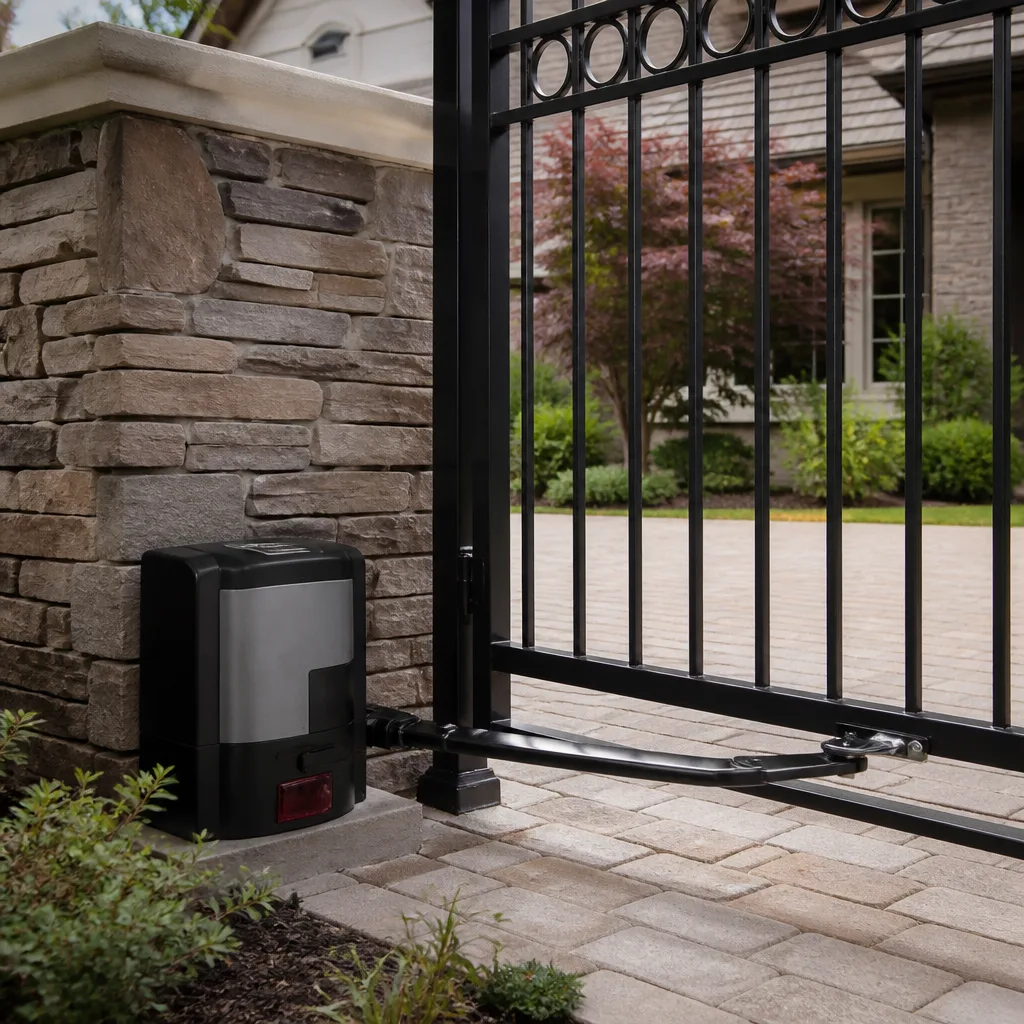
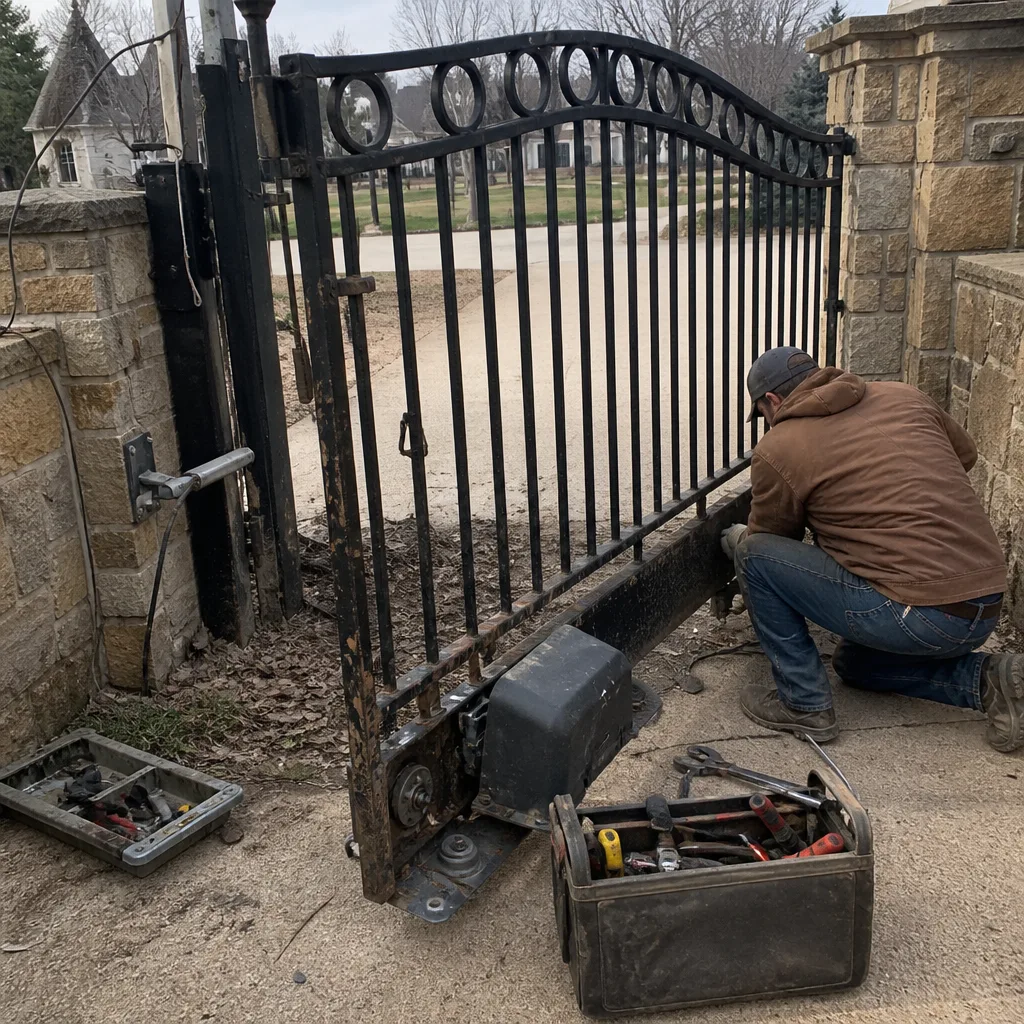 Before
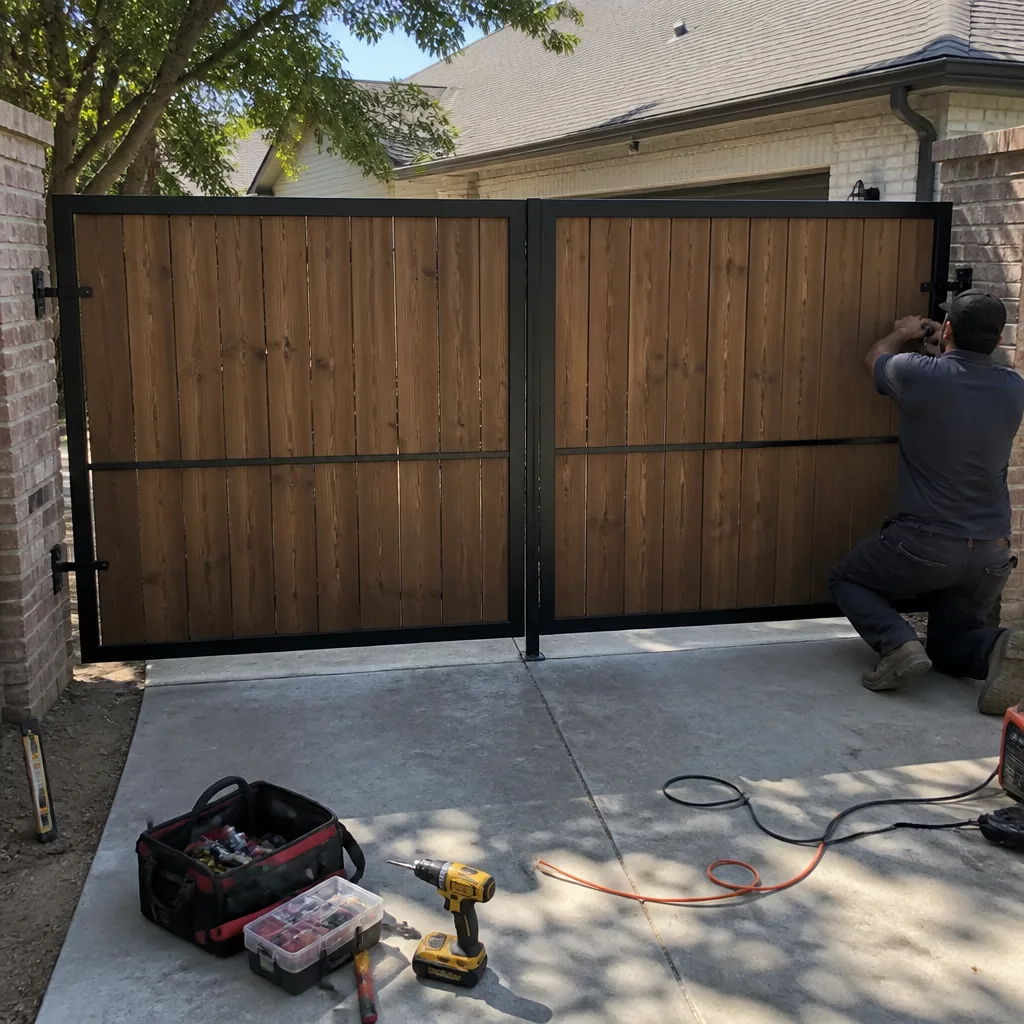 After
After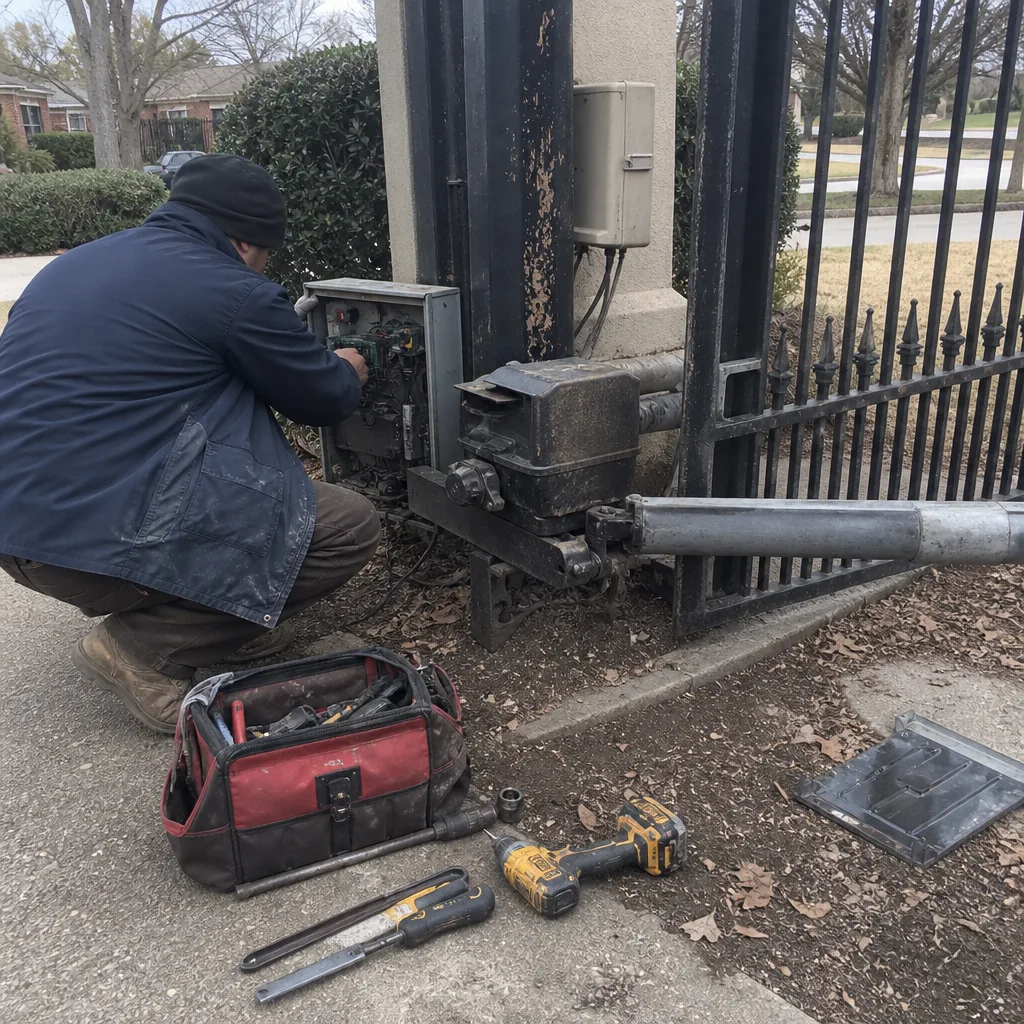 Before
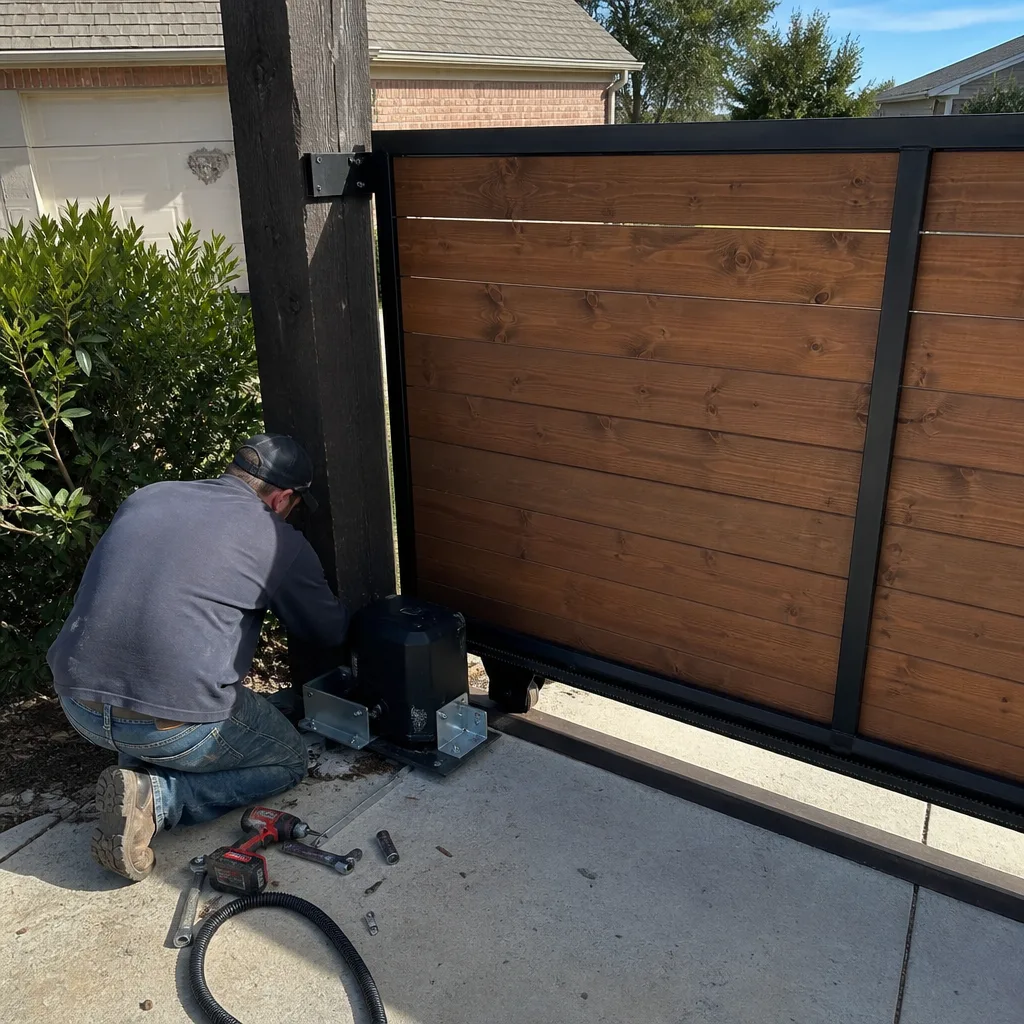 After
After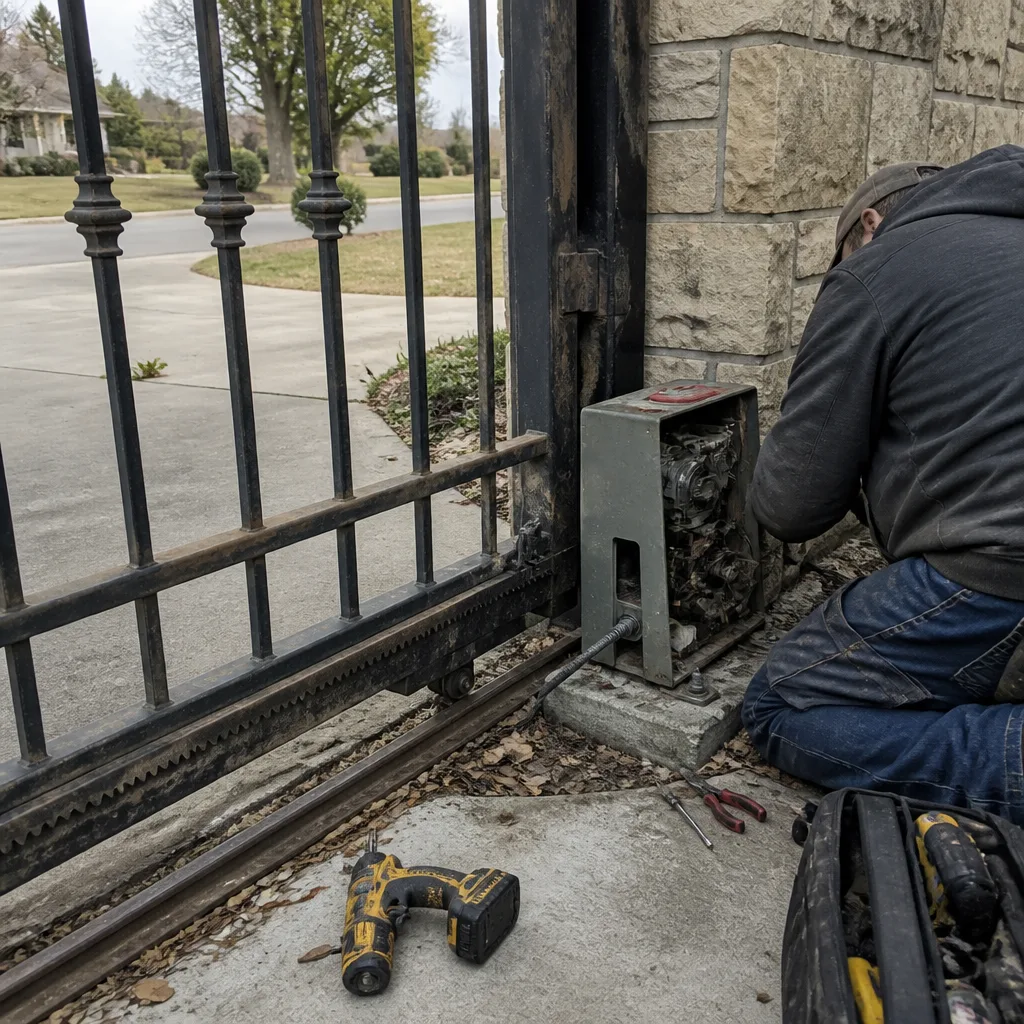 Before
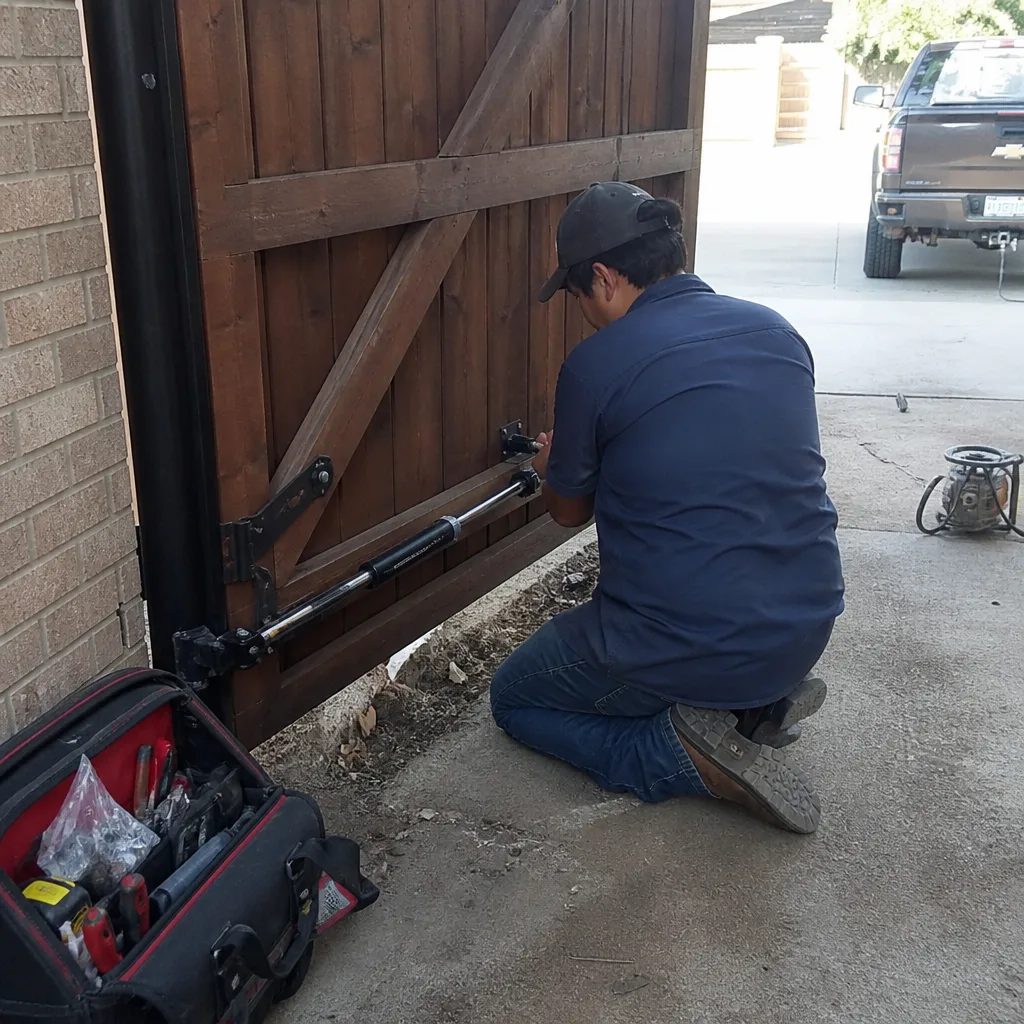 After
AfterGate Repair Permits, Codes & Inspections in TX: What You Need to Know
Nobody pulls a permit for a hinge replacement. But in Prosper, adding an automated opener to an existing gate that crosses a certain width threshold near a pool enclosure? That one has caught homeowners by surprise, and the contractor who didn’t mention it was long gone by the time the inspector showed up. Here’s the truth most people learn too late: about 80% of gate repairs in Texas need no permit at all. The other 20% are specific, enforceable, and expensive to get wrong. This guide maps the actual rules so you know before you call anybody, including where Prosper and Collin County draw the line between a gate repair and a new installation.
Quick Answer
Most gate repairs in Texas, including hinge work, post straightening, panel welding, and opener motor replacement on an existing system, do not require a permit. Permits typically come into play when you’re installing a new automated gate, widening an opening, adding an opener to a gate that never had one near a pool, or building within an HOA with architectural control. When a permit is required, it usually comes from the city (Prosper) or county (Collin County), and automated gates must meet UL 325 safety standards and Texas pool barrier code if they serve a pool enclosure. If you’re unsure, a quick call to the Prosper building department costs nothing and takes five minutes.
Table of Contents
- What “Repair in Kind” Means Legally in Texas
- Prosper & Collin County Permit Thresholds: Repair vs. New Installation
- Texas Pool Barrier Code and Automated Gates: UL 325, Entrapment, and What Inspectors Check
- How Prosper HOAs Layer on Top of City Code
- Who’s Responsible If an Unpermitted Automated Gate Injures Someone
- How to Document a Repair-in-Kind So You’re Not Forced to Upgrade
- What a Gate Inspection Actually Looks Like in Collin County
- Common Mistakes to Avoid
- When to Call a Professional
- Frequently Asked Questions
- The Bottom Line
What “Repair in Kind” Means Legally in Texas
In Texas, “repair in kind” means you’re restoring something to its original function without changing what it is or how it works. You replace a bent hinge with a new hinge. You weld a cracked panel back together. You swap a burned-out opener motor for a new one that operates the same gate the same way. Legally, that’s maintenance, not construction. No permit, no inspection, no code upgrade trigger.
The line gets crossed when the repair changes the gate’s character. Adding an opener to a manual gate is not repair in kind, it’s a modification. Widening a driveway gate from 12 feet to 16 feet is not repair in kind, it’s new construction. Moving a gate from a swing to a slide? That’s a different animal entirely. In Prosper, the building department treats these as new installations, which means plans, permits, and inspections.
Here’s the practical test we use with homeowners in Prosper every week: if the gate did the same job before the problem as it will after the fix, it’s a repair. If it does something new, or does it bigger, or does it with power it never had before, you’ve left repair territory. And that’s where the paperwork starts.
- Identify the original function. What did the gate do before it broke? If the answer is “opened manually on two hinges,” that’s your baseline.
- Compare the proposed work. Does the fix restore that exact function? If yes, it’s repair in kind. If the fix adds automation, changes the swing direction, or widens the opening, it’s a modification.
- Document the original condition before work starts. Photos, measurements, and a written note from whoever’s doing the work. This becomes your evidence if anyone asks later.
- When in doubt, ask Prosper’s building department. A five-minute call beats a stop-work order or a failed inspection after the concrete is poured.
We’ve fixed gates in Prosper’s Windsor Ranch and Lakes of La Cima neighborhoods where the homeowner thought they needed a permit for a simple post reset (see our Gate Repair Warning Signs: A Prosper Homeowner’s Reference Guide). They didn’t. But we’ve also seen the opposite: a homeowner who hired a handyman to “just add an opener” to a gate that served as a pool barrier, and ended up with a citation from the city because the opener lacked the required safety features. Knowing the difference saves real money and real headaches.
Prosper & Collin County Permit Thresholds: Repair vs. New Installation
Prosper sits in Collin County, but the town has its own building department and its own adopted codes. Most gate work falls under the town’s jurisdiction if you’re inside Prosper city limits. If you’re in an unincorporated part of the county, Collin County’s rules apply, and they’re generally lighter on gates specifically but stricter on anything touching a county right-of-way.
Here’s where the actual thresholds sit for gate work in Prosper as of the current code cycle:
- Repairing existing gate hardware (hinges, latch, wheels, track, panel welding, post resetting): No permit required, provided the gate’s size, location, and function don’t change.
- Replacing an automated opener motor on an existing automated gate: No permit required, provided the new motor matches the existing system’s type and the gate already met code when installed. UL 325 compliance on the new motor is still mandatory.
- Adding an automated opener to a manual gate: Permit required in Prosper if the gate is over 6 feet wide, if it serves a pool enclosure, or if it sits on a shared HOA boundary or easement. The permit triggers an electrical inspection and a gate safety inspection.
- Installing a brand new gate, including posts, frame, and any automation: Permit required if the gate is over 6 feet wide or over 7 feet tall, or if it’s attached to a fence that requires a permit. Setback and easement checks come into play here.
- Widening an existing gate opening or moving gate posts: Permit required, because you’re changing the structure and possibly the setback.
The 6-foot width threshold matters more than most people realize. A standard single-car driveway gate sits around 10 to 12 feet wide. A standard walk gate is 3 to 4 feet. Most residential driveway gates in Prosper are wide enough to trigger the permit requirement the moment automation enters the picture, unless the gate was automated when originally built and you’re only repairing it.
We tell homeowners to think about it this way: if the city required a permit when the gate was first built, they’ll likely require one when the gate’s function changes. If the gate has been there for 20 years and you’re just fixing what’s broken, the city has no interest in your hinge pin.
Texas Pool Barrier Code and Automated Gates: UL 325, Entrapment, and What Inspectors Check
Texas pool barrier code is where automated gates get the most scrutiny. The International Swimming Pool and Spa Code, which Texas adopts with amendments, treats an automated gate that serves as part of a pool enclosure as a life safety device, not just a convenience. That means the gate has to meet UL 325, the federal safety standard for automated gate operators, and the inspector will look at specific entrapment protection features.
Here’s what an inspector in Prosper will actually check on an automated pool gate:
- Entrapment protection sensors. The gate must have either contact sensors (pressure-sensitive edges) or non-contact sensors (photo eyes) that detect an obstruction and reverse the gate. Most modern operators from brands like Linear and DoorKing come with these built in, but older models don’t.
- Reverse on obstruction. The gate must reverse when it hits something, not keep pushing. The inspector will test this physically, not just look at the wiring.
- Emergency release. A clearly marked manual release that works without power, so the gate can be opened by a person from outside the pool area in an emergency.
- Gate speed and force. The gate can’t close fast enough to knock a child down or squeeze hard enough to cause injury. This is a measured test, not a judgment call.
- Self-closing and self-latching. Pool gates in Texas must close and latch on their own. If the gate swings open and stays open, it fails, period.
- Latch height and accessibility. The latch must be high enough that a small child can’t reach it from outside the pool area, and the gate must swing outward, away from the pool.
- Power and control wiring. All low-voltage wiring must be rated for direct burial or run through conduit, and the control box must be mounted at a height and location that meets code.
The UL 325 requirement is the one that trips people up most often. A homeowner installs a cheap opener from a big-box store, wires it up, and calls it done. Then the inspector points out that the opener isn’t UL 325 listed for that gate type, or the entrapment sensors were never installed, or the manual release is missing. At that point, the homeowner is either ripping out the opener or paying someone to bring it into compliance. In Prosper, pool gates get inspected more carefully than any other gate type, because the stakes are higher.
How Prosper HOAs Layer on Top of City Code
If you live in one of Prosper’s master-planned communities, Windsong Ranch, Star Trail, Lakes of La Cima, Whitley Place, your HOA architectural guidelines are often stricter than city code. The city cares about safety and setbacks. The HOA cares about how the gate looks, how tall it is, what color it is, and whether it matches the neighborhood’s design standards.
Here’s the reality: a gate repair that needs no city permit can still need HOA approval. And in practice, the HOA is often the harder gatekeeper.
- HOA approval typically applies to anything visible from the street. If you’re replacing a gate panel, changing the gate style, or adding an opener with a visible control box or arm, the HOA wants to see the plans first.
- Most Prosper HOAs use an architectural review committee (ARC). You submit a request, they review it at their next meeting, and you get an answer in 2 to 4 weeks. Some HOAs allow expedited review for like-for-like replacements, but that’s not universal.
- Color, material, and height restrictions are common. A black ornamental steel gate might be standard in one Prosper neighborhood and prohibited in the next. Failing to check means repainting or replacing a brand-new gate at your own expense.
- Automated gates often trigger additional HOA rules. Some HOAs restrict opener arm styles, require underground power runs instead of conduit along the fence line, or mandate a specific brand. We’ve seen HOAs in Prosper that specified Linear or Ghost Controls openers by name, which means no substitutions even if the hardware is equivalent.
The order of operations matters. City permit first if required, HOA approval second. Don’t skip the HOA step because the city said no permit is needed. The HOA’s authority comes from the deed restrictions you signed when you bought the house, and they can force you to undo non-compliant work even if the city never blinked.
Who’s Responsible If an Unpermitted Automated Gate Injures Someone
The answer is more complicated than most homeowners assume. If an automated gate on your property injures someone, the question of who pays depends on who installed it, who maintained it, whether it was permitted, and what the insurance policies say.
Start with the homeowner. In Texas, a homeowner is generally responsible for injuries that happen on their property. If your gate closes on a visitor and breaks their arm, your homeowner’s insurance is the first place a claim goes. If the gate was never permitted and never inspected, your insurance company may ask uncomfortable questions. Worse, if the gate lacks UL 325 safety features and your insurance company can show that you knew or should have known, you may find yourself underinsured or dropped entirely.
Now add the contractor. If a contractor installed the gate without a permit and without required safety features, and someone gets hurt, the contractor’s liability insurance may be on the hook. But here’s the catch: if the contractor is unlicensed or underinsured, or if the company has dissolved, you’re left holding the bag. In Texas, many gate installers are sole proprietors with minimal insurance. A lawsuit against them might win you a judgment and never collect a dime.
Then there’s the manufacturer. Gate openers from brands like Viking and Ghost Controls come with specific installation and safety requirements. If the installer ignored those requirements, the manufacturer’s liability is limited. If the opener itself failed due to a defect, the manufacturer may share responsibility. Product liability law is a separate animal from premises liability, and the two often run in parallel.
The practical takeaway for a Prosper homeowner: a permitted, inspected automated gate is your best liability shield. It proves you did things by the book. It gives your insurance company no reason to deny a claim. And it moves the question of fault from you to the people who designed and installed the system. The worst place to be is between an injured neighbor and an insurance adjuster with an unpermitted gate and no paperwork.
How to Document a Repair-in-Kind So You’re Not Forced to Upgrade
If your gate qualifies as a repair in kind, you don’t need a permit. But you do need a paper trail. Here’s why: future buyers, future inspectors, and future insurance claims can all ask the same question: “Was this gate originally permitted, and is this current work a repair or a modification?” If you can’t answer, you may be forced to bring an old installation up to current code, which can mean adding safety features, rewiring, or replacing the entire gate system.
Documentation is cheap. Rebuilding a gate is not. Here’s the process we recommend:
- Take before photos. The gate from multiple angles, the posts, the hinges, the opener if there is one, the control box, and the overall layout.
- Measure everything. Gate width, gate height, post size, opening size, distance from the pool if applicable, distance from property lines. Write it down.
- Write a one-paragraph description of the repair. What was wrong, what was done, what parts were used, and a sentence that says “This repair restored the gate to its original function. No changes were made to the gate’s size, location, automation status, or purpose.”
- Get a dated invoice from whoever did the work. A legitimate invoice from a legitimate company is evidence. A cash payment to a guy with no receipt is not.
- Keep the paperwork with your house records. Put it in the file with your closing documents. Five years from now, when you sell the house, the buyer’s inspector will ask about the gate. You’ll hand them a folder and the conversation will be over.
This matters especially in Prosper neighborhoods where builders installed gates in the early 2000s. Those gates are now 20 years old, and many of them were never automated. When a homeowner adds an opener to that old gate, the question of “repair or modification” comes down to documentation. If you can show the gate has been maintained, repaired, and kept in its original configuration for two decades, you’re on solid ground. If you can’t, you’re arguing with an inspector from a position of weakness.
What a Gate Inspection Actually Looks Like in Collin County
If your gate project does require a permit, here’s what happens after the permit is pulled. In Prosper and across Collin County, the inspection process for automated gates is usually two-phase: electrical rough-in and final safety inspection.
The electrical inspection happens before the wiring is buried or covered. The inspector checks that the power feed is properly sized, that low-voltage wiring is in conduit or rated for direct burial, that the control box location meets code, and that the system is properly grounded. If you’re trenching a power run from the house to the gate, this inspection happens before the trench is filled.
The final safety inspection happens after the gate is installed and operational. The inspector will:
- Test the gate’s operation. Open and close it several times, watch the speed, listen for strain.
- Test the entrapment protection. If the gate has photo eyes, the inspector will block them mid-close and confirm the gate reverses. If it has contact edges, the inspector will press against them.
- Test the manual release. The gate must be operable by hand from outside the pool area without tools in a pool enclosure application.
- Check the latch and self-closing function on any pool barrier gate.
- Verify setbacks and easements if the gate was moved or the opening was widened.
Inspections in Prosper are typically scheduled through the town’s permit portal, and the wait time is usually 3 to 7 business days. Plan for the inspection before you pour concrete or bury wire. A failed inspection means rescheduling, and rescheduling means delay. And delay on a broken gate means a driveway you can’t secure, which is a problem no one in Prosper wants to live with for a week.
Common Mistakes to Avoid
- Assuming all gate work needs a permit, and over-permitting. You don’t need a permit to replace a hinge. Paying permit fees and waiting for inspections on a simple repair wastes time and money. Know the line.
- Assuming no gate work ever needs a permit, and under-permitting. The opposite mistake. Adding automation to a wide gate near a pool without a permit is how you end up with a stop-work order and an angry inspector.
- Skipping the HOA step because the city said “no permit needed.” City and HOA are separate authorities. The HOA’s architectural review committee can force you to undo work the city never cared about.
- Letting a contractor talk you out of a permit to save money. A contractor who says “we don’t need permits out here” is either ignorant or trying to hide something. In Prosper, the rules are accessible, and the building department answers the phone.
- Buying a cheap opener online and installing it yourself on a pool gate. UL 325 compliance is not optional, and the safety features aren’t decorative. A pool gate without proper entrapment protection is a tragedy waiting to happen.
- Not documenting the repair. Photos, measurements, and a dated invoice are your proof that the work was a repair, not a modification. Without documentation, you’re at the mercy of whoever asks the question.
- Hiring the cheapest bid without checking insurance and licensing. If the gate injures someone and your contractor’s insurance doesn’t exist, your homeowner’s policy pays. The savings evaporate instantly.
When to Call a Professional
Some gate work is genuinely DIY-friendly. Replacing a latch, tightening bolts, spraying a hinge with lubricant, those are weekend jobs. But when the work touches automation, pool safety, or structural posts, you want someone who has done it hundreds of times and carries the right insurance (read our How to Hire a Gate Repair Contractor in Prosper: A Step-by-Step Guide for what to look for).
Call a professional if: the gate is automated and the opener is failing, the gate serves a pool enclosure, the posts are rotted or leaning, the gate won’t close properly and you have kids or pets, or the project will need a permit and an inspection. A licensed, insured gate contractor can pull the permit, schedule the inspection, and stand behind the work. Gatewood Fence & Gate has been fixing gates in Prosper since 2001, and we handle the permit and inspection process from start to finish. Call (979) 291-0947 for a free estimate, and we’ll tell you straight whether your project needs a permit or not.
Frequently Asked Questions
No permit is required for repair-in-kind work, meaning the gate’s size, location, function, and automation status don’t change. Replacing hinges, welding cracked panels, resetting posts, and swapping an opener motor on an existing automated gate all fall under repair in kind. A permit is required when adding automation to a manual gate, widening the opening, moving posts, or installing a brand new gate over 6 feet wide. Call (979) 291-0947 if you’re not sure which category your project falls into, and we’ll give you a straight answer.
UL 325 is the federal safety standard that requires automated gate operators to include entrapment protection, meaning the gate must reverse when it hits an obstruction or when sensors detect something in its path. The standard also mandates a working manual release and limits on closing force. Any new opener installed in Texas must comply, and inspectors test for it on pool gates specifically. If your gate is automated and you’re not sure whether the opener is UL 325 compliant, the model number on the control board will tell you.
If the repair is invisible, meaning the gate looks the same after the work as it did before, most Prosper HOAs don’t require approval. If the repair changes the gate’s appearance, style, height, color, or adds visible automation hardware, HOA architectural review is likely required. Communities like Windsong Ranch and Star Trail have their own design standards, and they’re often stricter than city code. Check your HOA’s guidelines before you start, not after the gate is in place.
Your homeowner’s insurance is the first line of defense, but an unpermitted gate that lacks UL 325 safety features can give your insurance company grounds to deny the claim. The contractor who installed it may share liability, but only if they have insurance and are still in business. You may also face fines from the city and be required to bring the gate into compliance. The cost of a permit and inspection is a fraction of what an injury claim costs, and it’s the best protection you can buy.
In our experience, the permit application itself is typically reviewed in 1 to 2 weeks, and the inspection is scheduled 3 to 7 business days after the work is ready. The whole process, from pulling the permit to passing the final inspection, usually takes 2 to 4 weeks for a standard automated gate installation. Repair work that doesn’t need a permit can be done same day. If you’re in a hurry, we can tell you upfront whether your project is a permit job or a same-day repair. For more guides & resources, visit our blog.
Generally no. Adding an opener to a manual gate is classified as a new automated installation, not a repair, which means the gate must meet current code, including UL 325, proper entrapment protection, and pool barrier requirements if applicable. If the existing gate doesn’t have the structural integrity to support automation, you may need to reinforce or replace the gate itself. A qualified gate contractor can assess what’s actually needed versus what a salesperson will tell you is needed. We’ve been doing this in Prosper since 2001, and we’ll show you the difference.
Most major brands, including LiftMaster, FAAC, BFT, Linear, Viking, Ghost Controls, DoorKing, Elite, and Mighty Mule, offer UL 325 compliant models that meet Texas code when installed correctly. The brand matters less than the installation. A compliant opener installed incorrectly, with missing sensors or improper wiring, will still fail inspection. We service all nine of those brands, and we see the difference between proper installation and corner-cutting every week. For gate motor and opener service in Prosper that passes inspection the first time, call us at (979) 291-0947.
The Bottom Line
Texas gate permits are simpler than most people fear and more specific than most people assume. Repair-in-kind work, which covers nearly all hinge, post, panel, and existing-opener fixes, needs no permit. Adding automation, widening openings, moving posts, or building a new gate over 6 feet wide triggers a permit in Prosper, and pool gates get the toughest scrutiny. HOAs add another layer that city code doesn’t cover. Document every repair, know your thresholds, and when the project involves automation or a pool, get a pro who’s done it before. The name on the shop is Hal Gatewood, and the shop is down the road, that’s the oldest accountability there is.
Written by Hal Gatewood, Owner at Gatewood Fence & Gate, serving Prosper since 2001.